
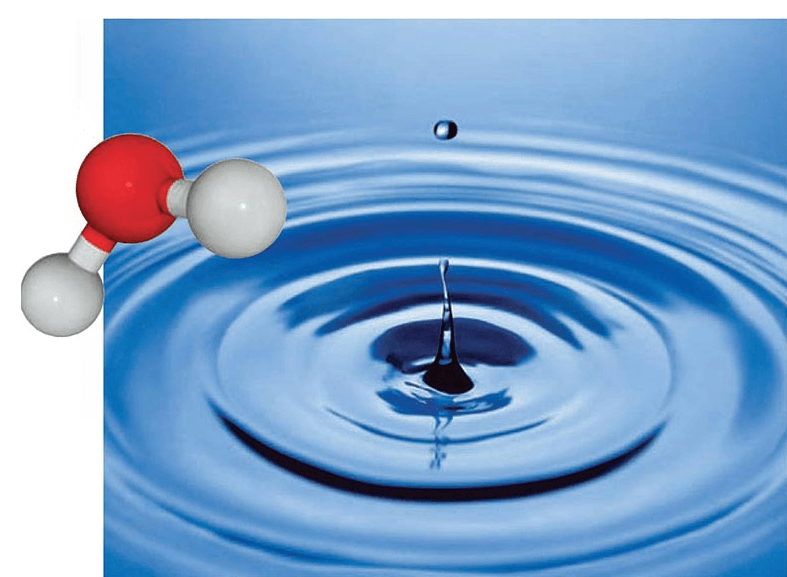
The world is full of diverse and numerous things. In fact, everything is made up of matter, such as water, carbon dioxide, food, sugar, salt, alcohol, copper, iron, aluminum, lime, glass, and so on. There are already tens of millions of known substances.
Skyscrapers are built from bricks, and all matter is composed of various "bricks." Molecules are the smallest "bricks" that make up matter. A molecule is the smallest "particle" in matter that can exist alone and possess all the chemical properties of that matter.
All pure elements and compounds are composed of the same particles, such as molecules or atoms. Take water, for example; whether it is pure water or distilled water, as long as it is pure water, it is composed of the same water molecules. There are approximately 30 million kinds of substances in the world. From the perspective of atomic-molecular theory, there are approximately 30 million kinds of molecules in the world, but this number is growing explosively.
Molecules are small and light. For example, a water molecule weighs only about 0.00000000000000000000003 grams; that is to say, there are 22 zeros after the decimal point, just like a long train with carriages full of zeros.
Since water molecules are so small, the number of molecules in a single drop of water is naturally astonishing. If a person counted one water molecule per second, without stopping for a full 1000 years, they would only be able to count one five-billionth of all the molecules in an ordinary drop of water!
Molecules come in all sizes. And molecules of all sizes are composed of even smaller particles—atoms. Atoms are incredibly small. We often use the phrase "as small as a sesame seed" to describe something tiny. In fact, a sesame seed compared to an atom is like the Earth compared to a sesame seed. If 500,000 to 1 million atoms were lined up side-by-side in a long, winding queue, they would only be about the diameter of a human hair.
The number of atoms that make up a molecule varies. For example, molecules like argon and helium are composed of only one atom and are called monatomic molecules.
Some molecules are composed of two atoms, such as an oxygen molecule, which is composed of two oxygen atoms. These are called diatomic molecules.
Some molecules are composed of three atoms, such as a water molecule which is composed of one oxygen atom and two hydrogen atoms. Some molecules are composed of four atoms, such as a sulfur trioxide molecule which is composed of one sulfur atom and three oxygen atoms. Still other molecules are composed of five, six, or even dozens of atoms, such as a sulfuric acid molecule which is composed of seven atoms; these are called polyatomic molecules.
The largest molecules are those found in macromolecules such as proteins, starches, plastics, fibers, and rubber. The molecule of porcine insulin is composed of 255 carbon atoms, 380 hydrogen atoms, 78 oxygen atoms, 65 nitrogen atoms, and 6 sulfur atoms. Even so, porcine insulin is not considered large among macromolecules. Some macromolecules are composed of tens of thousands of atoms.
Because different molecules contain varying numbers of atoms, their sizes differ significantly. If a molecule contains only one atom, then the molecule and the atom are the same size.
An atom is the smallest particle that makes up a molecule. While there are 30 million types of molecules in the world, there are only about 100 types of atoms. Roughly speaking, a chemical element has only one type of atom; atoms of various isotopes of the same element are all considered the same type of atom. Different numbers and types of atoms form different types of molecules.
Here's the thing: more than 100 different atoms make up about 30 million different molecules; these 30 million molecules make up different substances; and these different substances make up the rich and colorful world.