
Why is fluorine called the "death element"
In the history of the discovery and separation of chemical elements, the separation and preparation of simple fluorine is particularly difficult and full of dangers, bringing indelible pain and even death to many scientists. As a result, the fluorine element has won the terrible title of "Death Element". Let's take a look at the difficult discovery of fluorine!
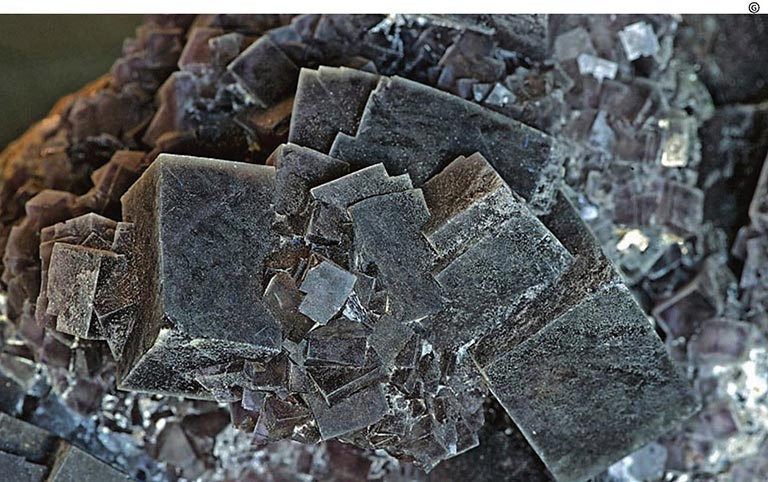
Fluorite, also known as fluorite, is a fluorine-containing mineral whose main component is calcium fluoride. In 1768, German chemist Maglaf first reported hydrofluoric acid. But it was not until 1810 that French scientist Ampere officially proposed that hydrofluoric acid contained a new element, and British chemist David named it Fluorine. However, extracting elemental fluorine was much more difficult than expected, as evidenced by the long and tragic process of preparing elemental fluorine that lasted for more than 70 years. Many chemists devoted themselves to the research of separating elemental fluorine. However, the separation of elemental fluorine was so dangerous and arduous that early researchers paid a heavy price for it, even with their own lives.
British chemist David was the first to try to prepare elemental fluorine, but was quickly forced to give up research due to poisoning. In 1836, two brothers George Knox and Thomas Knox of the Irish Academy of Sciences were severely poisoned during research on the preparation of fluorine. Subsequently, Ruyette of Belgium and Nikre of France unfortunately died of poisoning. British chemist Gore encountered an explosion accident while electrolyzing hydrofluoric acid to produce fluorine.
Why is the separation of fluorine so difficult? This is because fluorine is the chemical element with the most active chemical properties and the strongest oxidizing (its ability to capture electrons when chemical reactions with other elements). Ordinary chemical methods cannot prepare elemental fluorine, and it can only be obtained through electrolysis. Fluorine is a light yellow and highly toxic gas at room temperature that can react with most other elements and can also react violently with all organic compounds except perfluorinated organic compounds; when heated, fluorine can also corrode precious metals such as gold and platinum. Therefore, even if chemists at that time prepared a small amount of elemental fluorine in experiments, it was difficult to collect and identify it because it immediately reacted with other substances. On the other hand, fluorine and hydrofluoric acid are very toxic, and even a small amount of inhalation can be poisoned and may even be fatal. In the early exploration of preparing elemental fluorine, due to the imperfect experimental technical conditions at that time, accidents caused by accidental inhalation of hydrogen fluoride were prone to poisoning.
However, no difficulty can stop scientists 'indomitable spirit of exploration and dedication to truth. On the basis of drawing on the experience and lessons of his predecessors, the French chemist Moisant, after long-term arduous and meticulous exploration, despite being poisoned many times, he persisted. He finally electrolyzed anhydrous hydrogen fluoride and potassium hydrofluoride on June 26, 1886. The method of mixture successfully prepared and separated elemental fluorine for the first time. To this day, modern industry still uses Moisan electrolysis method to produce fluorine on a large scale. In 1906, in recognition of his outstanding contribution to the preparation of elemental fluorine and the invention of the Moisan electric furnace, Moisan was awarded the Nobel Prize in Chemistry. In 1907, Moisan, who was only 55 years old, passed away prematurely due to long-term contact with highly toxic substances, which seriously damaged his health.