
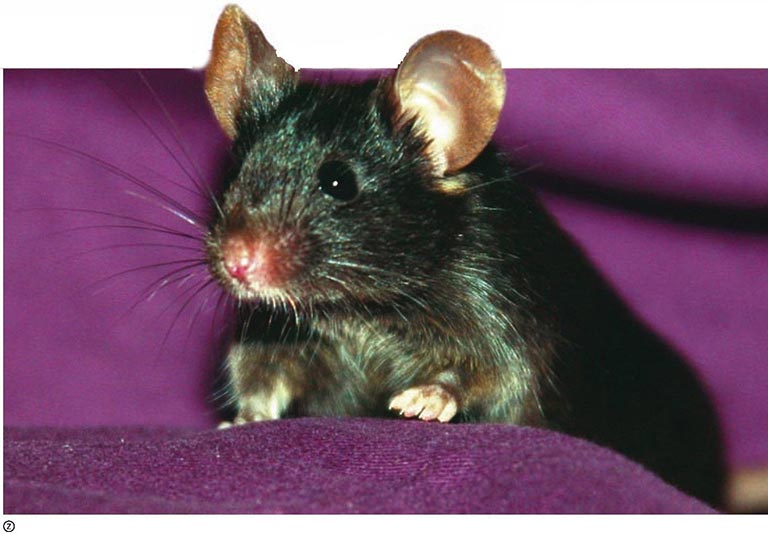
In 2009, the "Stem Cell" fascicle of the world's authoritative scientific journals "Nature" and "Cell" both reported a research result by China scientists that attracted the world's attention: They removed some skin cells from the tail of a male black mouse, and after "induction", the mice that developed successfully in the mouse's uterus (the asexual mouse was obtained) were called "Xiaoxiao." Nature magazine also held a press conference for this purpose and spoke highly of the work of China scientists.
The birth of a "small" will naturally remind people of "Dolly". As early as 1996, British scientists successfully cultivated a asexual sheep using the "mixed method of enucleated eggs and somatic cells." Since then, scientists have successfully obtained other animals, including cattle (1999), goats (1999), pigs (2000), rabbits (2002), cats (2002), rats (2003), horses (2003), dogs (2005), and so on. Since so many animals can already reproduce through mixed cells, does the "small" birth add a new method for animals to reproduce asexually? If not, why is this achievement so valued?
The reason is that the method used by China scientists to develop Xiaoxiao is no longer the "cell mixing method" of getting Dolly and other animals, but a new technology called the "induced stem cell method."
The "cell mixing method" can enable a variety of animals to reproduce, which proves that animal somatic cells and enucleated eggs are also "totipotency" and have the great significance of "breaking ice". However, this method has serious shortcomings. One is that it requires the use of eggs from the same species or close relatives, but eggs from many animals are very difficult to obtain. In order to get suitable eggs, scientists spent a lot of time and suffered a lot. Second, the success rate of this method is extremely low. Of Wilmut's 277 experiments, only Dolly survived. When horses were bred using this technology, only one pony was born alive out of the 841 embryos formed. Third, animals obtained by the "cell mixing method" have problems of one kind or another. For example,"Dolly" died early, which shows that there are still some problems in the totipotency of the "assembled" cells obtained by cell mixing. It would be nice if there was a way to make animal somatic cells "totipotency" without using enucleated egg cells.
China scientists genetically "induced" 37 cell lines of "multifunctional stem cells" from skin cells of male black mice, selected 6 of them, separated these cells one by one, implanted them into more than 1500 mouse "tetraploid" blastocysts, and then transferred them into the uterus of mice. Twenty-one days later, a white mouse whose uterus was borrowed finally gave birth to its first black mouse. This was "Xiaoxiao". Subsequently, 26 more mice were born one after another. All 27 mice were skin cells from one mouse, so they were a mouse clone. Now, the second and third generations of "Xiaoxiao" have hundreds of mice, and it has also become the "mouse master" of this big family.
The birth of Xiaoxiao and its descendants proved that animal somatic cells (skin cells used here) can be turned into "pluripotent stem cells" without the "cell mixing method" and just a few foreign genes. This is an important development in animal asexual reproduction technology and an important breakthrough in stem cell theoretical research. It is undeniable that the method of using foreign genes to "induce" skin cells into "stem cells" is effective, but it also has shortcomings. It uses the genetic material of the virus as a means of delivery. After completing their "handling" task, these viruses remain in the cells forever, leaving hidden dangers. They are also randomly inserted into cells 'DNA, potentially destroying some "good" genes that are important to the organism, or turning on some "bad" genes that are harmful to the organism. The "pluripotency" of "induced stem cells" also means that they have a strong ability to reproduce future cells and the ability to change into any other type of cells, and there is a risk of forming cancer cells. Fortunately, the "Xiaoxiao" and "Xiaoxiao" younger brothers obtained by China scientists are now full of descendants, but the danger we are worried about has not yet emerged among their descendants. But since there are potential dangers, we must prevent them before they occur.
In 2012, German scientists announced that they could turn skin cells into neural stem cells by adding various protein "growth factors" that can promote and control cell growth and differentiation to cell culture media. In this way, there is no need to worry about the dangers caused by foreign genetic material in the cells. However, the stem cells formed in this way are not "all-powerful stem cells" and can only differentiate into a limited number of nerve cells. Although the stem cells formed in this way have relatively weak ability to grow and differentiate, they do not introduce foreign genetic material and have a relatively low risk of producing cancer cells. Although this technology cannot yet be used to sexually reproduce animals, it can be used to replace broken and dead cells and tissues. With the rapid development of related technologies in the field of cell engineering, people are waiting to see the future scenario for scientists to show their skills in the field of stem cells.