
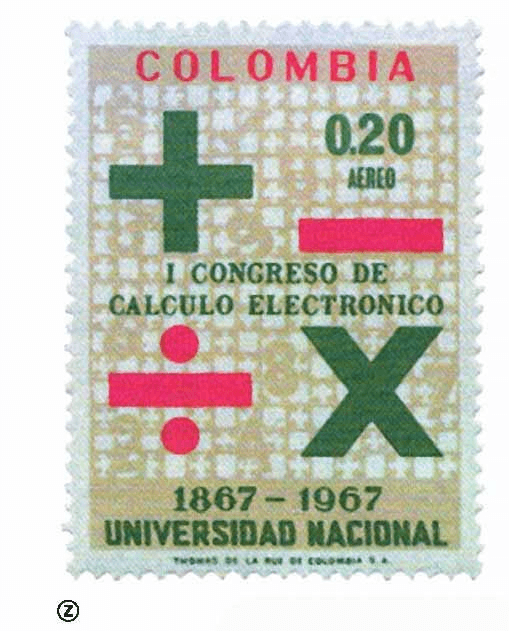
Everyone knows their usage and meaning, but do you know how they came about? The ancient Indians and Greeks unanimously wrote two numbers together to express addition. Today, people can still see traces of this method in the writing with fractions. If they want to express the subtraction of two numbers, they write the two numbers separately. For example, this means that the minuend must be written before, and the subsumment must be written after, and cannot be reversed. Later, someone used the Latin letter P to represent addition and M to represent subtraction. For example, 5P3 means 5+3, and 7M6 means 7-6. In the late Middle Ages, European commerce gradually developed. Some merchants often drew a "+" on the boxes they loaded, indicating that the weight was slightly more than a little, and a "-" to indicate that the weight was slightly less. It was not until 1489 AD that German Widman officially used these two symbols to represent addition and subtraction operations in his work. Later, after the vigorous promotion and promotion of the French mathematician Veda, these two symbols began to become popular.
The "×" signs and "÷" signs appear slightly later. The "×" was created by the Englishman Oret in 1631, and the "÷" first appeared in algebra books compiled by the Swiss. Later, the great German mathematician Leibniz believed that the "×" sign was easy to confuse with x, which represents the unknown number, and the stroke in the middle of the "÷" sign was not necessary. He suggested replacing "×" and "÷" with "·" and ":". Therefore, in mathematical books published in Germany, this aspect is still different from other countries in the world.
The earliest "=" sign appeared in the famous book "Li Zhi Shi" by the British mathematician Record in the Middle Ages. The reason why he chose two parallel lines of equal length as equal sign was because they could not be more equal. However, the use of the "=" sign was not widespread until the 18th century.