
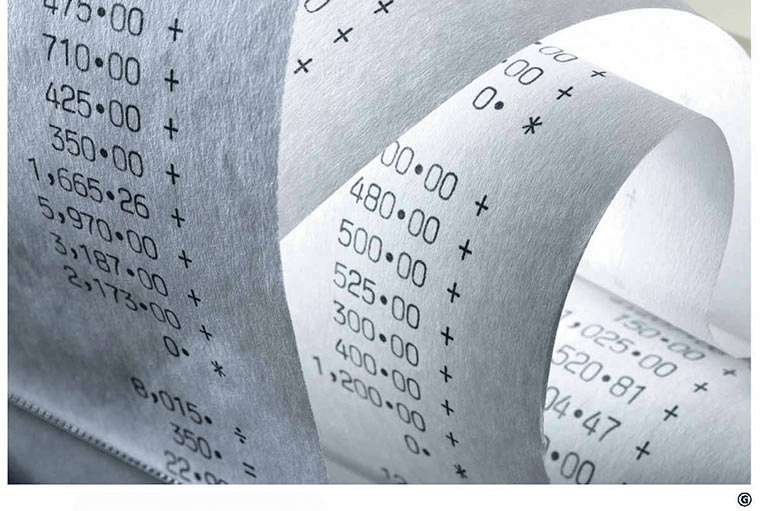
The decimal point, as a symbol for decimal, is associated with decimal. However, you may not know that decimal points appear thousands of years later than decimal points.
In theory, decimal numbers are decimal fractions. For example, 3.14 means that as early as the 3rd century AD, China mathematician Liu Hui had introduced decimal fractions. Liu Hui's method of expressing decimal fractions (decimal numbers) is very cumbersome, such as 3.1415926, which is expressed as 30 feet, 1 foot, 4 inches, 1 minute, 5 centimeters, 9 milli2 seconds, 6 flashes. This treatment introduces different names for different decimal places, which is similar to expressing 2.35 yuan as 2 yuan, 3 cents and 5 cents.
During the Song and Yuan Dynasties, the concept of decimal numbers was further popularized in China, and several new methods of representing decimal numbers emerged. One of them uses the method of reducing the decimal part by one square, such as 3.1415926, which is expressed as 31415926.
In the West, decimal numbers appear very late. One who made an important contribution to this was the Dutch mathematician Stefan. In "On Decimal System", he clearly elaborated on the theory of decimal numbers for the first time and gave the notation for decimal numbers. For example, 3.1415 can be expressed in his notation as where the symbol is placed after the single digits of the number, separating the integer part from the decimal part; the symbol ① is placed after the tenth digit, and the number marked before it is the first decimal place; the symbol ② is placed after the percentile, and the number marked before it is the second decimal place; other symbols and so on.
After Stefan, decimal numbers quickly became popular in Europe, but his clumsy notation lasted a short life. As a simplification, someone introduced decimal separators and then marked the number of decimal digits with a symbol at the last digit of the decimal. In fact, it is unnecessary to use some symbols to express the number and order of decimal places. Those who realized this took a simpler approach. One way is to raise the decimal part by one square, such as expressing 3.1415926 as 3^1415926, which is very similar to the practice in the Song and Yuan Dynasties in China.
A more common practice is to write the decimal part on the same line as the integer, but only use a symbol to separate the integer from the decimal part. However, different people often introduce different separators. Some use a vertical line as a separator, for example, 3.1415 is represented as 3| 1415。Napier, the inventor of logarithm, used the decimal point as we know it in the 17th century." "Make a separator.
But for hundreds of years, decimal separators remained very confusing. By the end of the 19th century, there were various decimal notation. For example, 2.5 can be expressed as: 2'5, 2°5, 2▲5... Nowadays, the writing of decimal points in countries around the world is not completely unified, but there are mainly two types left. One is the "," used by European countries such as Germany and France; the other is the "." used by China and the United States.
In fact, many of the simple and beautiful mathematical symbols used in modern times have gone through a long and complex evolution process similar to the decimal point. In the development of mathematics, various symbols were once introduced and mixed. Then, after a long period of repeated screening and elimination, inconvenient symbols were abandoned, and the ones that were finally preserved became the current internationally common mathematical symbol.