
Mathematics, which could once be mastered with just a pen and paper, has now become a technology, and a key one at that—a seemingly unbelievable transformation. However, it is undeniable that mathematics, as a crucial foundation, a scientific language, and a powerful tool, plays a vital role in people's daily lives and production. Furthermore, the consensus is that mathematics plays a key, even decisive, role in many important areas of modernization.
Although mathematics plays an almost ubiquitous role, it often works behind the scenes, remaining unseen and truly an "unsung hero." This is because, based on mathematical research, many calculations are often done in advance and become a standard in engineering or application, directly used in specific production processes. On the surface, the mathematics is no longer needed or visible, and even if it were necessary to use mathematics directly for analysis and calculation on-site, there is often not enough time.
However, the situation has changed dramatically in recent decades. The rapid development and widespread adoption of computers and various high-performance algorithms have provided powerful technological tools for mathematics, allowing it to move beyond the era of pen and paper. The combination of mathematical ideas and methods with computational technology has formed a crucial and feasible technology called "mathematical technology." Mathematics plays a key role in this technology; without it, many devices would be nothing more than scrap metal. Advances in computational technology can be instantaneous, online, and truly achievable.
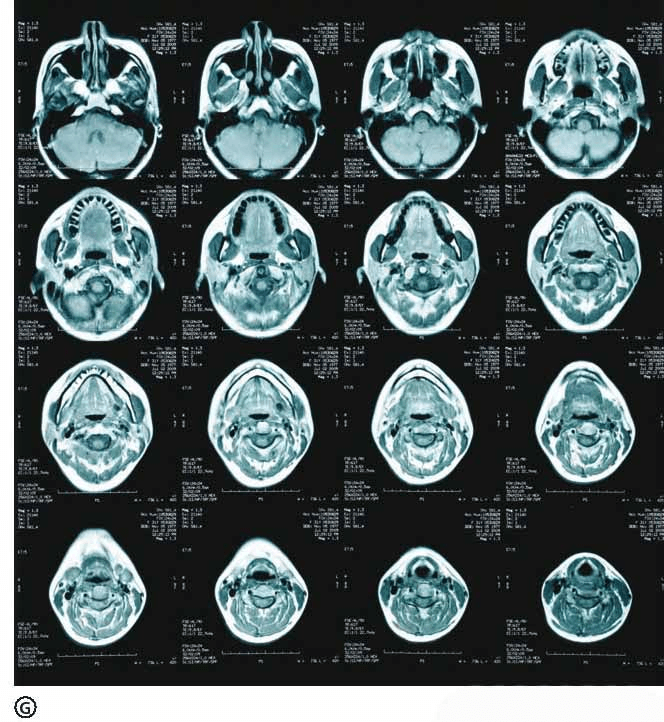
CT (Computed Tomography) is a prime example of this advanced medical technology. Given a three-dimensional object, can its precise shape be deduced from its planar projections in various directions? This is a mathematical problem, already solved by the Radon transform. Modern CT technology essentially reconstructs the location and shape of tumors inside the human body by projecting X-rays in different directions, which is fundamentally the same as the aforementioned mathematical problem. Therefore, the core of a CT scanner lies in the computer software or hardware that implements the Radon transform; without it, the scanner is worthless.
Therefore, mathematical technology is essentially the materialization of mathematical ideas and methods into computer software or hardware, becoming an important component of technology. In this way, mathematics can also become a technology, and a key technology at that, forming products—high-tech products—that truly and directly transform into productivity, creating wealth for the nation and its people, and playing a core role in technological progress. This further demonstrates the value of mathematics, gradually shifting its role from the background to the forefront. As modern technology increasingly develops towards high precision and sophistication, quantitative aspects require extremely high precision and rigor; many high technologies are essentially mathematical techniques.