
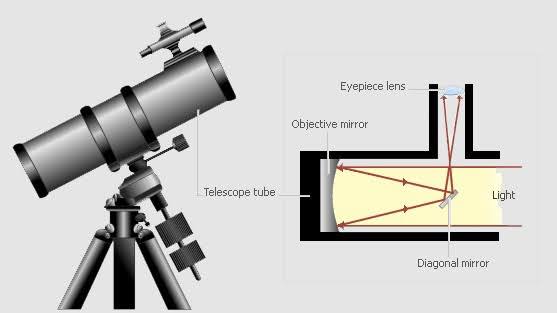
Astronomical telescopes can be divided into two categories according to their different optical structures: refractive and reflective. The earliest telescopes used the refraction of light from transparent lenses to image images. This was called "refractive telescopes". The first refraction telescope Galileo used for astronomical observations was called the "Galilean" telescope. Refractive telescopes have a variety of aberrations, especially an aberration called "chromatic aberration", which can be said to be a natural defect of refractive telescopes, which will turn a point into a color spot. At that time, the only way to reduce the chromatic aberration was to lengthen the focal length, so people built many refractive telescopes with extremely long mirror bodies. For example, the refractive telescope made by the famous astronomer Heverius in the 17th century was more than 40 meters long and used. Very inconvenient.
Chromatic aberration is caused by the different refractive indices of glass for different colors of light. Newton discovered a way to completely overcome chromatic aberration, that is, not allowing light to be refracted inside the glass, but to form the image through reflection from a concave mirror. Based on this, Newton designed a telescope, later called a "Newton-style" telescope, which used a concave spherical mirror instead of a transparent glass sheet. Spherical mirrors, like lenses, can also condense light, and telescopes made with them are called "reflective telescopes."
Newton once predicted that refractive telescopes would not be able to solve the chromatic aberration problem. However, people later used different types of glass to combine achromatic refractive telescopes, or even advanced apochromatic telescopes. These telescopes have sharper imaging than reflective telescopes at the time and a larger observation field of view, becoming a tool for astrophotography and astrometry.
However, as people need ever-larger telescopes to detect faint, distant objects, refraction telescopes have become increasingly powerless. Since light enters the inside of the glass, this places high requirements on the internal quality of the lens; achromatic telescope objective lenses contain at least two lenses, which requires grinding of four surfaces; the lenses are thick and heavy, which not only increases the burden on the lens barrel, but also severely absorbs light. At present, the world's largest refractive telescope has a diameter of 1.02 meters. It was built more than 100 years ago and is installed at the Yerkes Observatory in the United States. Since then, no attempt has been made to build a larger refractive telescope.
In contrast, reflecting telescopes do not absorb light severely and are much simpler to manufacture. They can have a large aperture, making them the choice of most observatories in the world today. In the mid-20th century, 5-meter-class reflecting telescopes were put into observation and brought many important discoveries. At the end of the 20th century, people built a 10-meter-class reflecting telescope, and now scientists are working hard to develop a 30-meter or even 40-meter aperture reflecting telescope. Among the professional telescopes whose caliber is king, reflecting telescopes are now the world.