
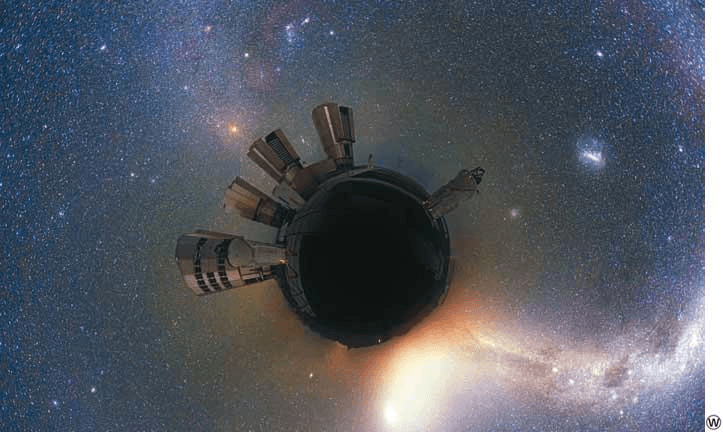
If you ask an astronomer, "What will the weather be like tomorrow?", they'll likely be taken aback. This is because as an astronomer, they neither study the atmosphere nor work in weather forecasting. Their interest lies primarily in things beyond Earth's atmosphere. Some astronomers study celestial bodies in our solar system, including planets like Mars and Jupiter, and also focus on low-mass objects like comets and asteroids; their field is "planetary science." Some astronomers prefer studying the Sun and even more distant stars; their field is "stellar astronomy." Some astronomers study galaxies, composed of stars and other celestial bodies, and even more distant galaxies; their field is "galactic astronomy." Still others enjoy exploring the story of the entire universe, focusing on whether it's expanding or contracting, when it formed, and what its future holds; this field is called "cosmology." In short, all celestial bodies beyond Earth's atmosphere are objects of study for astronomers.
However, there are exceptions. For example, there is a branch of astronomy called "meteor astronomy." Meteors are luminous phenomena produced by meteoroids entering the atmosphere from outer space and rubbing against it. Although this phenomenon occurs within the atmosphere, its origin is in space, and therefore it is also of interest to astronomers. Similar to meteor astronomy, meteorites falling to Earth from outer space, auroras produced by charged particles from the sun, and clusters of high-energy particles in the atmosphere are all objects of astronomical study.
So who should be responsible for weather forecasting? It turns out that meteorologists are responsible for researching weather and climate. However, astronomy and meteorology were often discussed together in the past. This is because early observatories in China, such as the Hong Kong Observatory, Xujiahui Observatory, and Qingdao Observatory, primarily focused on recording meteorological data, with astronomical observations being secondary. This explains the misconception that "astronomy and meteorology are one and the same."
As academic disciplines have become increasingly specialized, astronomy and meteorology have gradually become two independent fields. Today's observatories no longer handle meteorological observations, allowing astronomers to focus on their beloved celestial bodies. However, because astronomy is an observational discipline, requiring the use of telescopes to observe distant celestial objects, understanding the weather conditions at the time of observation is crucial. Therefore, observation...
Astronomers will then pay close attention to weather changes in order to develop better observation plans.