
Why do astronomers use star catalogs
Astronomers begin by unlocking the secrets of the universe by recording the positions of stars. Those tabular indexes that are numbered for stars are star catalogs. The earliest known star catalogs in China were compiled by Gan De and Shi Shen of the Warring States Period, and their original works have long been lost. "Ganshi Xingjing", a collection compiled by later generations, is still left with only a few words quoted by others. The first Western star catalog compiled by the ancient Greek astronomer Hipparcos was also known to the world because it was mentioned in the work of another ancient Greek astronomer Toreme, which included more than 1000 stars.
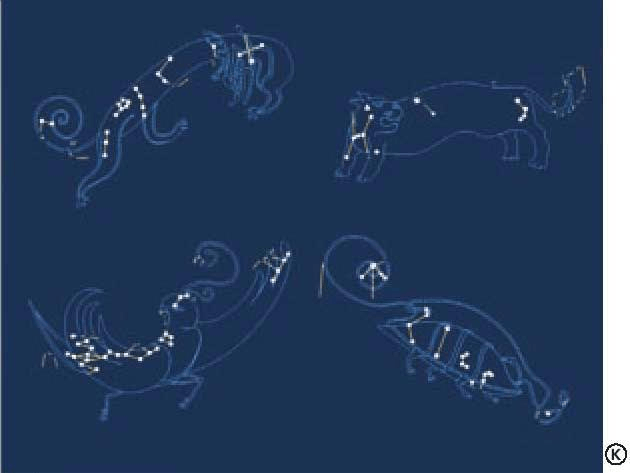
The ancients in China divided the sky near the equator into "four elephants" for a total of 28 nights. Later, astronomers continued to compile more accurate star catalogs. Danish astronomer Tycho established the Wenzo Observatory in 1576, completing the most accurate astronomical observations before the telescope era. Later, German astronomer Kepler compiled and published the "Rudolf Catalog" based on Tycho's observations, laying a reliable foundation for him to discover the laws of planetary motion. But at this time European observers had never seen the starry sky near the South Pole. In 1676, Halley, a 20-year-old British astronomer, arrived at St. Helena in the South Atlantic on a ship of the East India Company, where the first Southern Sky Observatory was established. Three years later, he published his first "Southern Star Table", so he was known as the "Tycho of Southern Sky". He received a degree from Oxford University and was elected to the Royal Society.
There are not only bright and dazzling stars in the sky, but also many beautiful nebulae, which also have their own star catalogs. While searching for comets, the 18th century French astronomer Messier discovered that there were many vague objects in the sky that could easily be confused with comets. He then compiled a list of 110 such celestial bodies and published it under the name "Messier Catalog." We know today that these relatively faint objects include both diffuse nebulae and dense star clusters, as well as distant galaxies. This table is now called the "Messier Nebula and Cluster Catalog". The beautiful celestial bodies listed in the table are still the targets of frequent observations by astronomers and astronomy enthusiasts to this day.
After more than 400 years of observation, today's catalog types are very rich. From different celestial types to different observation bands, each type of celestial body has its own catalog. Moreover, the content of the catalog has also been greatly expanded. In addition to the position of the celestial body, it also includes many information such as distance, color, temperature, spectral type, and redshift. This voluminous data, which once consumed the lives of many astronomers, is now easily accessible via the Internet. The largest astronomical catalogue database is currently the CDS database system (http://cdsweb.ustrasbg.fr) developed and maintained by the Astronomical Data Center in Strasbourg, France, where all historically important catalogues and the latest research results can be uniformly queried.