
#What is water
"What is water? "" Water is water! "
You might answer this. This is what people answered hundreds of years ago. However, this answer is not scientific.
The true nature of water was first seen through by people in the early 18th century. At that time, there was a chemist named Joseph Priestley in England who often loved to perform magic tricks for his friends. Once, he took an "empty" bottle, shook it a few times in front of friends, and then quickly moved a burning candle closer to the bottle. "Bang! "The deafening sound scared my friends, and some were so scared that they crawled under the table. A long flame of fire came out from the mouth of the bottle, but it immediately died out.
It turned out that Priestley had previously filled two colorless gases in the bottle-hydrogen and air. Hydrogen has a temper. When it is mixed with air and burned, it will make a loud sound-a burst. This mixed gas is chemically called exploding gas.
Priestley performed this funny trick many times to curious friends, but the chemist did not notice that there was a mysterious guest living in the bottle where he finished performing the trick.
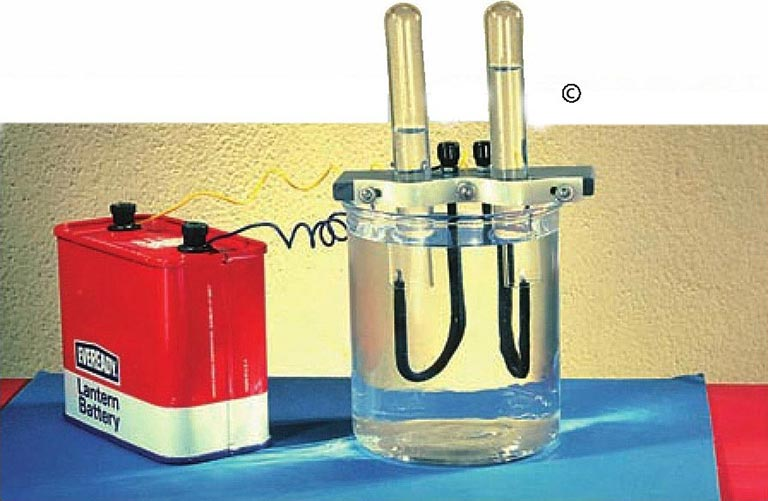
Finally, once, Priestley's eyes stayed on the wall of the bottle for a long time: Hey! There are many water droplets on the bottle wall! This was a mystery at the time and a very astonishing thing. Priestley didn't believe it at first, thinking that his bottle had not been dried. So, he used dry hydrogen gas and dry bottles to patiently experiment again and again. Experiments have proved that after hydrogen burns in air (combines with oxygen), it becomes water. In other words, water is composed of hydrogen and oxygen. Since then, many scientists have continued research and finally proved that a water molecule contains two hydrogen atoms and one oxygen atom. Therefore, the scientific answer to the question of what water is should be: water is a compound composed of hydrogen and oxygen, and a water molecule consists of two hydrogen atoms and one oxygen atom. The easiest way to verify the chemical composition of water today is to electrolyze the water, collecting two volumes of hydrogen at the cathode and one volume of oxygen at the anode.