
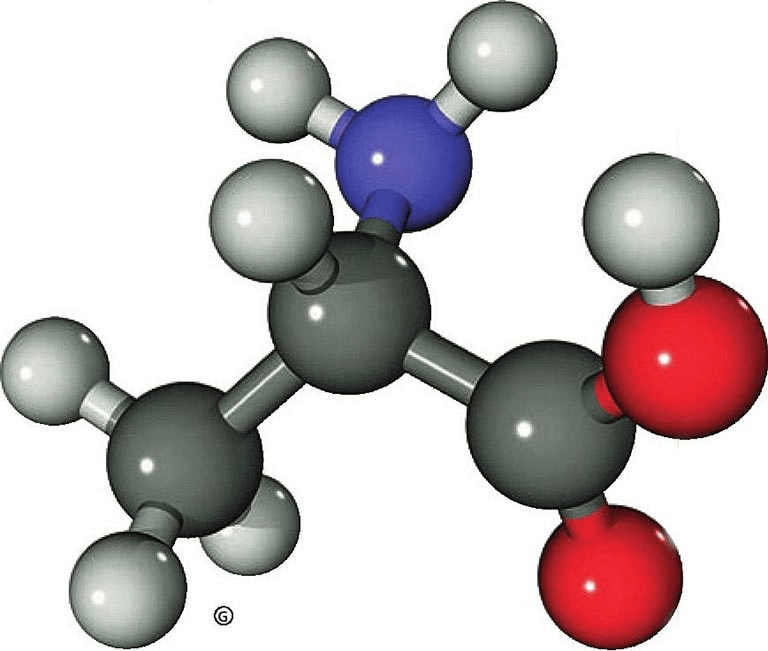
Among the 94 naturally occurring elements, carbon is quite special. It's located in the center of the first period of the periodic table, with four electrons in its outermost shell. That's not a lot, but it's not a little either. Whether it's capturing electrons from other atoms to reach eight, or discarding all four, it's very difficult. Therefore, its best option is to share electrons with other atoms. For example, one carbon atom sharing electrons with four hydrogen atoms forms the natural gas molecule (methane, CH4).
The most unique ability of carbon atoms is that they can connect with each other by sharing electrons, forming long chains or ring structures. Such carbon chains are essential components of the most basic molecules that make up life, such as amino acids and nucleotides.
Therefore, all life-forming compounds on Earth are based on carbon atoms as their "skeleton." Coal, an important fossil fuel, is actually the carbon skeleton left behind after ancient life molecules were broken down under high temperature and pressure.