
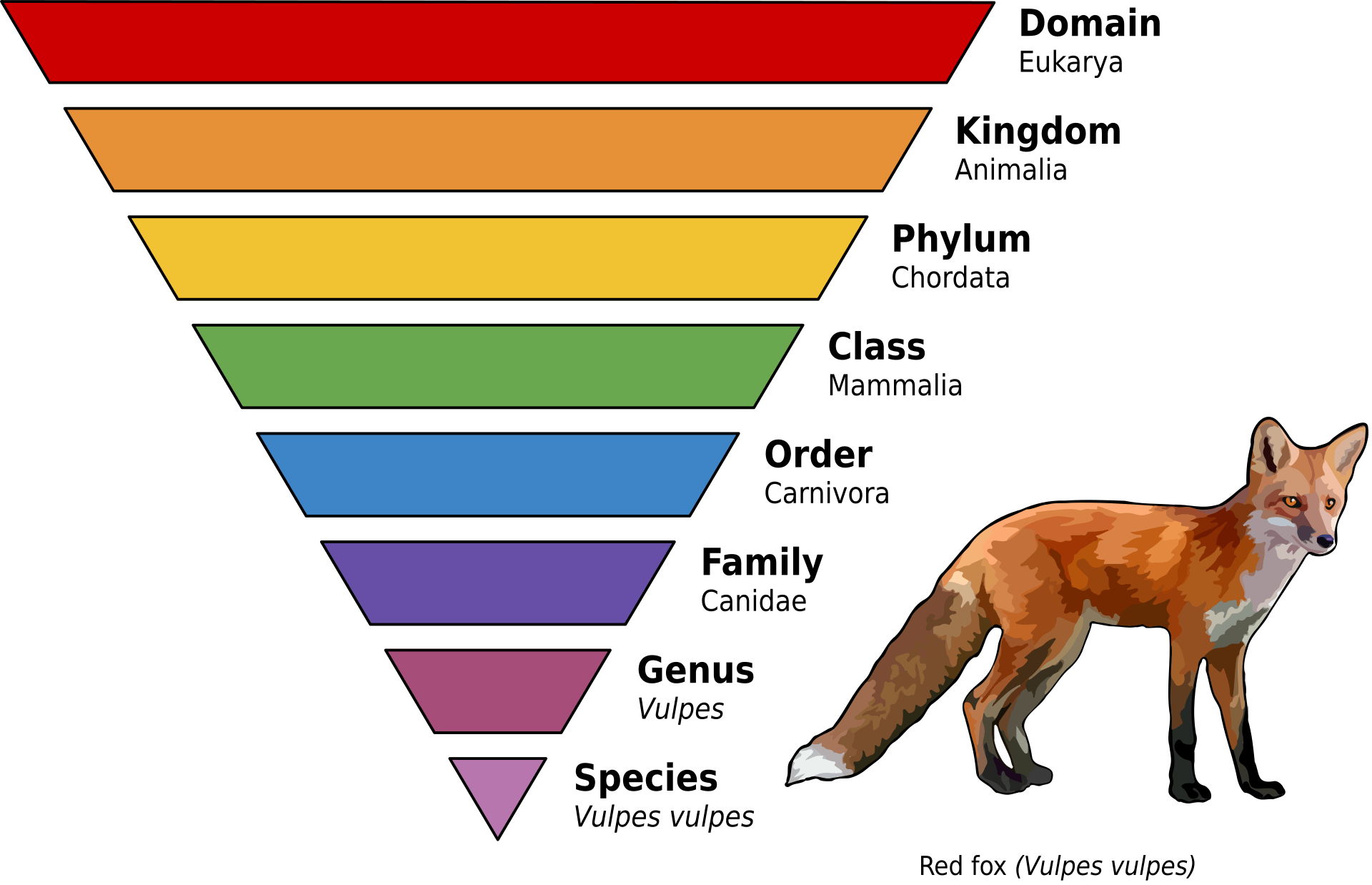
As early as the 18th century, Swedish botanist Linnai and other naturalists began to explore the kinship between various organisms on earth. Based on the similarities and differences of biological characteristics, they sorted out the subordinate levels of organisms and established a stepped classification system, including seven levels: realm, phylum, class, order, family, genus, and species. Today, these seven ladders have become an internationally recognized standard biological classification system.
In the entire biological classification system, species are the most basic taxonomic unit and biological entities that exist objectively in nature. Due to the differences in languages and scripts among countries in the world, if countries name species themselves, there will be confusion in the same species and different species with the same names, which will greatly hinder international academic exchanges. In order to solve this problem, the academic community has uniformly adopted the ** double name method ** created by Lin Nai as the global common naming rule for species scientific names.
The core levels of biological classification are: kingdom, phylum, class, order, family, genus, and species. The double name method has strict writing rules: the scientific names of all species are composed of two Latin or Latinized characters, and the whole is written in italics. The first word is a generic name, which takes the form of a Latin noun, and the initials must be capitalized; the second word is a species name, which takes the form of a Latin adjective, and the initials need not be capitalized. For example, the scientific name of human species is Homo sapiens, and the scientific name of tiger is Felis tigris.
In formal taxonomic literature, the last name or surname abbreviation of the named person needs to be marked at the end of the scientific name of a species to mark the source of the naming. For example, the scientific name of cabbage, Brassica chinensis L., The L. at the end is the abbreviation of Linnai's Latin name Liné, which means that the species was named after Linnai.
In addition to the basic double name method, there is also a ** three-name method ** used to subdivide species in biological classification, which is mainly suitable for subclassifications below species. In animal classification, the taxon below the species are subspecies, and the subspecies name needs to be added after the double name of the species. For example, the scientific name of modern humans is Homo sapiens sapiens, and the sapiens at the end is the subspecies name, which refers to the subspecies of Homo sapiens, which distinguishes it from Neanderthals Homo sapiens neanderthalensis.
The naming rules of botany subclassifications are slightly different. Taxonomic units below species are not called subspecies, but varieties. When naming, you need to add the formal variant abbreviation var. after the scientific name of the species, Continuing to write variant names also belongs to the three-name method. For example, the scientific name of cabbage is Brassica oleracea. As varieties of cabbage, the scientific names of cauliflower and cabbage are Brassica oleracea var.botrytis and Brassica oleracea var.capitata respectively.
In taxonomic research, if you encounter situations where specific species cannot be accurately determined, a general labeling method can be used: add the orthographic species abbreviation sp. after the genus name, Represents uncertain species of the genus, such as Macaca sp., which refers to an uncertain species of the genus Monkey.
The seven classification levels of biology follow the logic of hierarchical classification: similar species are classified into the same genus, similar genera are classified into the same family, similar families are classified into the same order, similar orders are classified into the same class, and similar classes are classified into the same phylum. The highest level ladder in the classification system is "realm". From the perspective of biological evolution, realm represents the earliest species differentiation in the process of biological evolution.