
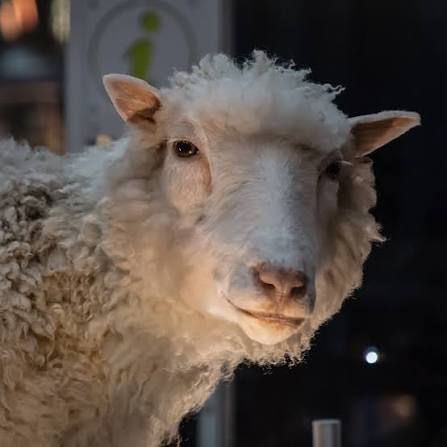
Why did "Dolly" sensation the world
On February 24, 1997, the British "Times" published a report on the life history of a sheep, which was reprinted by various media. This news quickly spread around the world and attracted great attention from all over the world. This 7-month-old lamb is as white as snow, naughty and lovely. Its name is "Dolly."
The birth process of "Dolly"
It turned out that on July 5, 1996, Ian Wilmut, a scientist at the Roslin Institute in Edinburgh, England, announced a piece of news: they had bred a sheep using artificially made "mixed cells." According to sources, the mixed cells were made from cells from two ewes. During the process of making the mixed cells, they removed mammary cells from the mammary gland of a 6-year-old white-faced ewe in Dorset, Finland, and at the same time from another Scottish black-faced ewes. Remove the egg cells from the body and then remove the nucleus of the egg cells. This makes the originally intact cells become nuclear-free hollow cells. They quickly fused mammary cells from white-faced ewes with hollow egg cells from black-faced ewes, resulting in mixed cells. The artificially manufactured mixed cells divided under the stimulation of electrical pulses and further formed early embryos. In order to allow the early embryo to continue to develop into a sheep, they transferred the early embryo to the uterus of another ewe. After the embryo developed into a sheep in the uterus, the ewe gave birth, and the lamb left the mother and was named "Dolly".
Since The Times published the report on "Dolly", politicians, scientists, and ordinary people around the world have held heated discussions around "Dolly" for quite a long time. Scientists believe that the advent of "Dolly" is a milestone in the history of the development of bioengineering technology, proving that "alltipotent stem cells" can be artificially manufactured through the mixed cell method. In addition, the technology of artificially manufacturing mammalian totipotent stem cells also has great application value. First of all, the technology of artificially manufacturing synthetic stem cells takes less time and can stably maintain heterosis compared with traditional animal hybridization technology; in addition, the technology of artificially manufacturing totipotent stem cells can also be used for the breeding of endangered rare animals; In medicine, the technology of artificially manufacturing totipotent stem cells also has a bright future and has great potential.