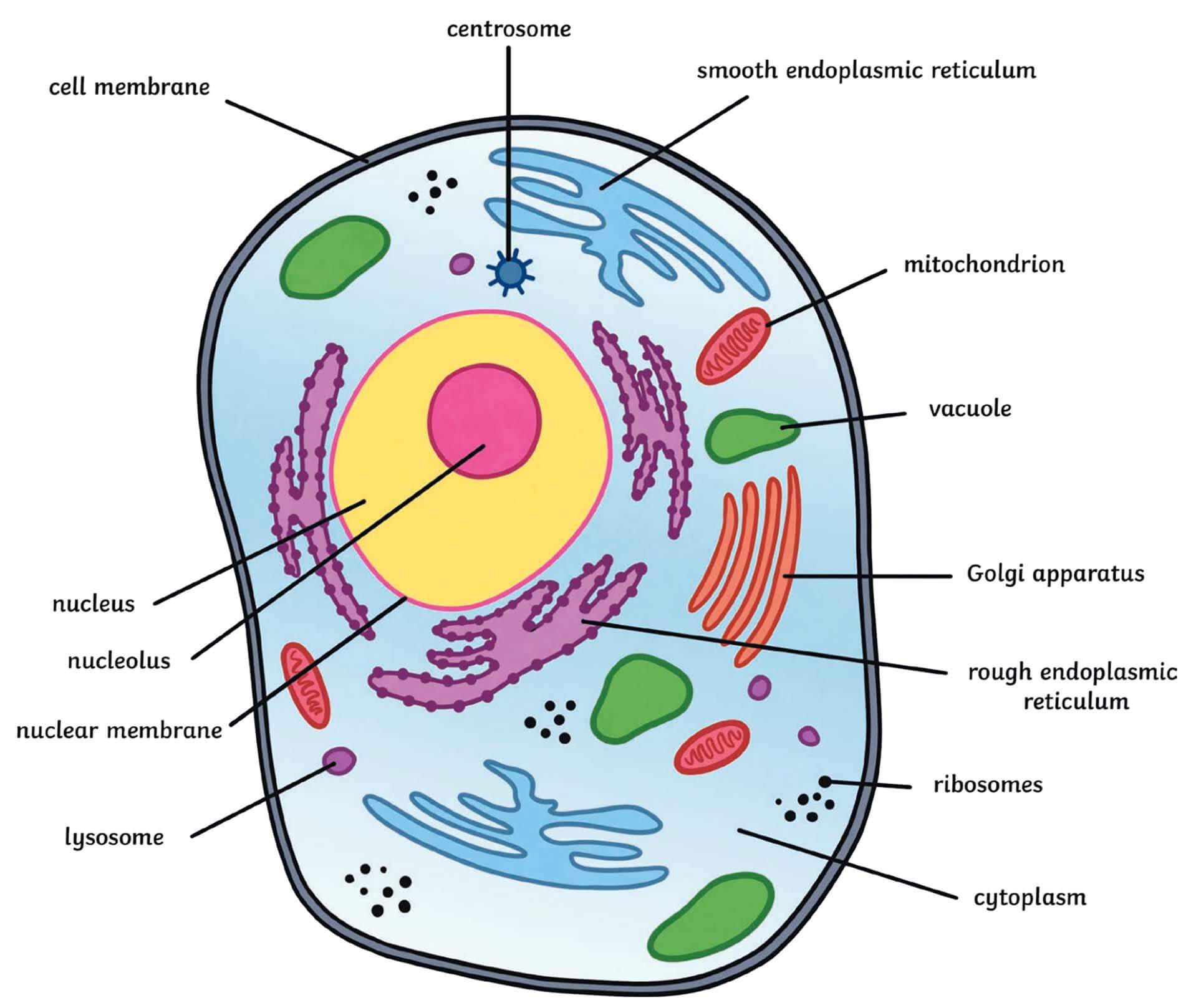
Why is the cell an 'independent kingdom' A complete cell consists of a cell membrane, cytoplasm, organelles and nucleus. The outer layer of a cell is a bilayer membrane made of proteins and phospholipids that is cleverly assembled, called a cell membrane. If cells are compared to an independent country, then the cell membrane is equivalent to a country's borders. In addition to border posts, customs are also set up on the border. Border posts and customs not only protect national security, but also are responsible for the exchange of people and materials with the outside world. Similarly, the cell membrane not only protects the safety of cells, but also relies on these "checkpoints" to selectively control the entry and exit of multiple substances. Once the cell membrane is destroyed, the cell no longer exists. Inside the cell membrane is the cytoplasm, which contains various organelles, such as mitochondria, chloroplasts, lysosomes, ribosomes, Golgi bodies, endoplasmic reticulum, etc. Mitochondria are like a group of small cells that live in large cells. They have their own membrane structure and contain the genetic material DNA. Mitochondria are energy conversion stations. Everyone knows that without power plants, no matter how much coal you burn, the lights will not shine, because the heat released when coal burns cannot be converted into electricity. Power plants are energy conversion stations that convert heat energy into electrical energy, while mitochondria are conversion stations that specifically convert chemical energy into biological energy. As the saying goes: "People are iron, rice is steel. If you don't eat a meal, you'll be hungry. "Why are people hungry if they don't eat? This is due to the lack of biological energy. Rice stores chemical energy, which cannot be directly utilized by the human body. The human body can only use biological energy. The mitochondria in cells can convert the chemical energy in food into biological energy; then the biological energy is stored in a substance called ATP (adenosine triphosphate). ATP is like miniature energy warehouses, providing appropriate energy to organisms at any time. Organisms must consume food in order to survive, just as humans must eat regularly, otherwise they will starve to death. However, not all food that enters the body may be beneficial to human health, and food is often mixed with some harmful substances. In addition, during the eating process, the human body not only obtains nutrients from food, but also produces some wastes, such as ammonia, free radicals, etc. If cells cannot eliminate wastes and poisons in time, the cells will become "garbage dump." Fortunately, there are organelles such as lysosomes and peroxisomes in cells. These organelles are like cleaners dedicated to environmental sanitation. They can not only remove toxic substances in food and waste after food decomposition from the cells, but also remove bacteria, viruses, etc. Ribosomes are another type of organelle within the cytoplasm. This organelle is a protein synthesis factory or workshop. Without ribosomes in the cell, proteins cannot be synthesized.
Why is the cell an "independent kingdom"?
This article focuses on "a cell is an independent kingdom" and introduces that a cell is composed of a cell membrane, cytoplasm, organelles and nucleus. The cell membrane is similar to a border line to regulate the entry and exit of substances. The mitochondria convert chemical energy into biological energy. The lysosomes clear waste and poisons. The ribosomes synthesize proteins, and each structure and function are clear, confirming that the cell is an independent kingdom with complete functions.