
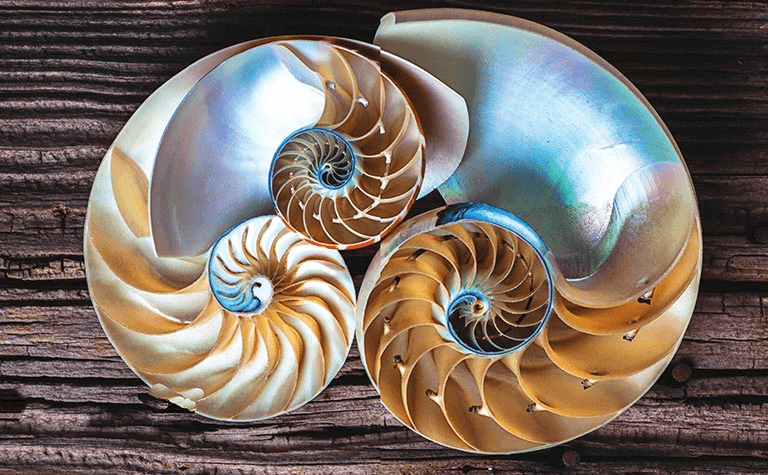
Among all the arithmetic sequences, the Fibonacci sequence is undoubtedly the most famous one. In 1202, Leonardo Fibonacci, a mathematician born in Pisa, Italy, completed his masterpiece, The Book of Abacus, in which he studied an interesting "rabbit breeding problem", from which the Fibonacci sequence was derived.
The rabbit breeding problem is actually a mathematical model proposed by Fibonacci: assuming that a pair of large rabbits give birth to a pair of small rabbits every year, and all rabbits live forever, then what is the law of rabbit breeding?
In the first year, there is only one pair of small rabbits. In the second year, the small rabbits grow into a pair of large rabbits, and the number of rabbit pairs is still 1. In the third year, the large rabbits give birth to a pair of small rabbits, and the number of rabbit pairs becomes 2. In the fourth year, the original pair of small rabbits grow into a pair of large rabbits, and the number of rabbit pairs becomes 3.
...
Summarizing the law of rabbit breeding, we can find that: the number of rabbit pairs in each year = the number of rabbit pairs in the previous year + the number of new rabbits born in that year = the number of rabbit pairs in the previous year + the number of large rabbits in the previous year = the number of rabbit pairs in the previous year + the number of small rabbits in the previous year.
That is, if we record the number of rabbit pairs in the nth year as Fn, then F1 = F2 = 1, and for n ≥ 3, Fn = F(n-1) + F(n-2), so we get the following sequence: 1, 1, 2, 3, 5, 8, 13, 21, 34, 55, 89, 144, 233, 377, 610, 987,... where each term from the third term onwards is equal to the sum of the previous two terms. Since this sequence was first studied by Fibonacci, later generations called it the Fibonacci sequence.
The Fibonacci sequence is a very interesting, useful, and famous sequence, which has many wonderful properties. Mathematicians have not stopped studying it until now. Below, we will briefly introduce a few of them.
Using the first six numbers of the Fibonacci sequence, 1, 1, 2, 3, 5, 8, as the sides of six squares, we can form a rectangle with sides of 8 and 13. Generally, n squares with sides of the first n numbers of the Fibonacci sequence can form a rectangle with sides of Fn and F(n + 1). In fact, the following property can be proved by mathematical induction:
The Fibonacci sequence also has a general formula: where φ is the famous golden ratio.
Isn't it amazing that a sequence composed entirely of natural numbers can be represented by the irrational number φ as its general formula? As early as the mid-18th century, the famous mathematicians Descartes and Euler already knew this formula. By the middle of the 19th century, the French mathematician Jacques Philippe Marie Binet rediscovered this formula.
In addition, it can be seen that as n gets larger and larger, the ratio of two consecutive terms in the Fibonacci sequence, F(n + 1)/Fn, will become closer and closer to the golden ratio φ.
In addition to many wonderful mathematical properties, scientists have also noticed that some quantities in the plant world also follow the Fibonacci sequence, such as the number of branches of a tree, the number of petals of a flower, the distribution of fruit grains, and the arrangement of fruit peel spirals. On the beautiful sunflower, there are one left and one right spirals on the flower disc. If there are 13 right spirals, there will be 21 left spirals, for a total of 34. The scales of pine cones are also arranged in a spiral, with small pine cones emitting 5 columns to the right or left, and 8 columns in the opposite direction. In addition, many flowers have a large number of petals, such as 3, 5, 8, 13, 21, etc. If you are interested, you can count some flowers to see for yourself.
The leaves of plants are arranged in a spiral on the stem. In 1611, the German astronomer Kepler discovered that if the leaves located around the stem or branch are placed in a circle, the number of leaves in the circle will be a Fibonacci number.The two nearest leaves on the same direction are regarded as the beginning and end of a cycle. Within this cycle, there may be many leaves, which may twist around the branch or stem several times. If the total number of leaves in a cycle is m, and the number of times the leaves twist around in this cycle is n, then both m and n are numbers related to the Fibonacci sequence. For example, for elm trees, n=1 and m=2; for beech trees, n=1 and m=3; for cherries and oak trees, n=2 and m=5 (that is, there are 5 leaves in each cycle, and the cycle ends after twisting around 2 times); for pear trees, n=3 and m=8; for willows, n=5 and m=13. These numbers are all in the Fibonacci sequence, which is really amazing!
There are many more stories about the Fibonacci sequence, especially the close relationship between the Fibonacci sequence and the golden ratio.