
Why do humans need to breathe? Because sustaining life requires inhaling oxygen and exhaling carbon dioxide. Why not inhale carbon dioxide and exhale oxygen? Because oxygen reacts with glucose in the body to release energy, which can be used by humans. Why does oxidation release energy? Why is there so much oxygen on Earth? Why can oxygen form in the universe...? In fact, behind all these "whys," there are countless more.
Regarding nature, almost every human being, with their insatiable thirst for knowledge, constantly asks "why" questions. To find answers, sometimes you turn to medicine, sometimes to biology, and sometimes to chemistry. However, as Weinberg, the 1979 Nobel laureate in physics, said, the difference with physics is that if you continue to ask "why" after getting the answer, after several attempts, you will inevitably bring the question into the realm of physics, since physics is a fundamental discipline that studies the basic structure and laws of motion of matter. From primitive life and slash-and-burn agriculture to space travel and cosmic exploration, every step in the progress of human civilization has been deeply marked by the advancements in physics.
A physicist once joked that if you asked him to study the characteristics of a chicken, he would first consider a spherical chicken in a vacuum. This is because physics likes to extract the core elements from dazzling phenomena, transforming complex problems into simple models. For example, physicists continuously break down matter, meticulously analyzing the smallest elementary particles; they also continuously extend the observed world, studying the vast expanse of spacetime from a high-level perspective. Physics uses this unique research method to cover all levels of the structure of matter and its laws of motion.
In the eyes of physicists, the entire known world can be reduced to a few fundamental elements: time, space, matter (fields, particles), and energy. All forms of interaction between them can be reduced to the interactions of gravity, electromagnetism, the weak force (which plays a role in radioactive decay), and the strong force (which plays a role in nuclear reactions). These fundamental elements and fundamental interactions are like the "0"s and "1"s and a few basic instructions in a computer. Through countless arrangements and combinations, they can take on solid, liquid, gaseous, or plasma states; they can become conductors, insulators, semiconductors, or superconductors; they can produce sound, light, heat, or electricity; and they can even grow, reproduce, possess thought, and ask "why."
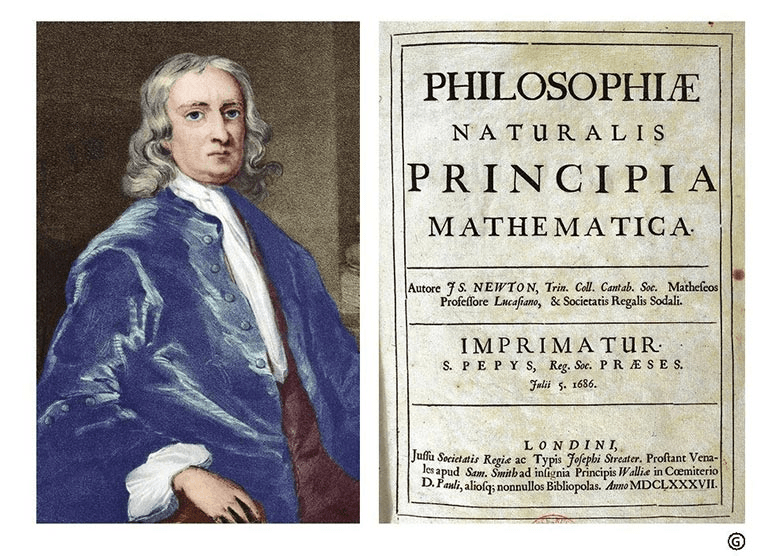
Physics is a discipline that highly integrates mathematics, theory, and experimentation. It can categorize seemingly unrelated phenomena into the same theoretical framework, using abstract mathematical language to write the theoretical framework, and then rigorously testing theoretical predictions through experiments and observations, aiming to provide us with profound insights into the laws of nature. For example, the falling of an apple and the rotation of the moon can both be described by universal gravitation; based on Newton's law of gravitation, the existence of Neptune was predicted and discovered. In physics, these three components complement each other and are indispensable. Without theory and experiment, mathematics is a castle in the air; without mathematics and experiment, theory is empty talk; without mathematics and theory, experimentation is aimless. Only by combining these three can humanity strategize effectively and predict the future.
Fundamental physics has permeated every corner of life; it can be said that physics principles are everywhere in our lives. Classical physics research in thermodynamics, electricity, electromagnetic waves, and fluid dynamics led to the invention of the steam engine, various electrical appliances and communication tools, and airplanes, becoming the cornerstone of modern human civilization. As for modern physics, just looking at the Nobel Prize-winning research reveals that a series of technological innovations driven by the application of physics principles have greatly improved human lifestyles. For example, research on the radioactivity of the atomic nucleus and magnetic resonance has led to CT scans (X-ray computed tomography), PET scans (positron emission tomography), and a series of other modern diagnostic and treatment methods in hospitals; research on transistors, giant magnetoresistance, and optical fibers has led to large-scale integrated circuits, high-capacity hard drives, and the internet; research on lasers, radio, atomic clocks, and relativity has led to industrial control, wireless communication, and satellite positioning systems… It is conceivable that graphene, high-temperature superconductivity, quantum manipulation, quantum computing, and quantum communication—these emerging and ongoing cutting-edge physics explorations—may bring about welcome and revolutionary changes to human existence.
The pursuit of knowledge in physics is endless, because every time we solve an old problem, we introduce a series of new ones. Although we have a preliminary grasp of the basic structure and laws of motion of the world, we are far from exhausting all possible forms of matter, far from understanding the fundamental meaning of the laws, and even less have we figured out the dark matter and dark energy that constitute a large proportion of the universe. Questions remain: Can elementary particles be further divided? Is time and space continuous? What is the ultimate fate of the universe? Why is our universe the way it is? Why can't there be another universe, with a different appearance, or even obeying a completely new set of physical laws? More fundamental questions remain: Who are we? Where did we come from? Where are we going… It seems that the number of "whys" in optical physics far exceeds one hundred thousand, and we can continue to ask them forever.