
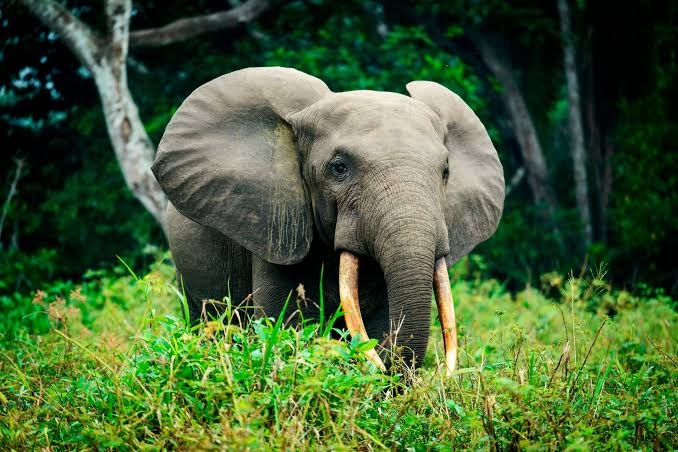
Among the mammals on land, the oldest animal should be the elephant, which generally can live for 60 to 70 years. Of course, for the same species, the life expectancy of wild life and captive life is different. For example, elephants raised in captive life will live to over 100 years old. Because for wild animals, they have to forage for food, compete for spouses, and seize territory, which may cause harm or even kill themselves. Under artificial breeding conditions, because there is sufficient food and cage breeding prevents individuals from fighting, the life expectancy is relatively long. Among marine mammals, blue whales should have the longest life expectancy, generally estimated to be more than a few decades, but the exact longest life expectancy record is currently uncertain. In addition to food and fighting, what other factors are related to life expectancy?
There is a certain correlation between the lifespan of animals and their heartbeats per minute, or heart rate. Heart rate is related to body size: if the body is larger, the heart rate is relatively slow; if the body is smaller, the heart rate is relatively fast. Why is heart rate related to body size?
Mammals are warm-blooded animals, commonly known as warm-blooded animals. They can maintain a constant body temperature to meet the needs of efficient metabolism. The various enzymes needed for metabolism can only function efficiently at a certain temperature. At temperatures that are too low or too high, the enzyme either does not work or is destroyed. Therefore, temperature-changing animals such as snakes and frogs must hibernate and sometimes sleep in summer.
Mammals have a relatively effective system and means for regulating temperature to maintain a constant body temperature. For example, fur can keep warm and sweat glands can dissipate heat. Cellular metabolism in warm-blooded animals is the source of heat production. Food is digested and metabolized and turned into energy to maintain the function of various body systems and maintain a constant body temperature. The body surface of a warm-blooded animal is a place for heat dissipation. When the body temperature of a mammal is higher than the temperature of the surrounding environment, the energy produced by the body will turn into heat and be radiated into the surrounding environment through the body surface.
The larger the body volume of an animal, the smaller the ratio of its body surface area to volume, and the higher the efficiency it will be at maintaining body temperature. On the contrary, the smaller the body volume, the greater the ratio of body surface area to volume, and the lower the efficiency of maintaining body temperature. Rats belong to the latter category, so they have more difficulty maintaining body temperature than elephants. Calculated from relative weight, more energy is needed. In this way, the metabolism of the mice is stronger and their body activities are more frequent. Therefore, the heart rate will be faster, consume relatively more, and produce more waste, resulting in rapid decline and shorter life expectancy. Large animals have a slow heart rate, stable metabolism, consume relatively little, and produce less waste, so they decline slowly and live longer. Therefore, elephants in mammals live longer, which is one of the secrets of longevity among reptiles.