
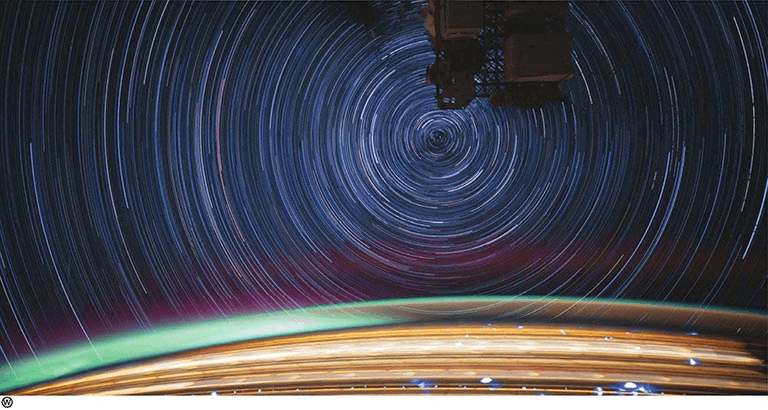
#Why do some stars never set and some stars never rise
The sun rises east and sets in the west every day, and the stars in the sky also rise and set in the west every day. Are there stars that won't set? Yes! People in the northern hemisphere will find that the North Star is a star that never sets. Other stars, on the contrary, never rise into the sky.
How the stars we see move depends on where we are on Earth. In Beijing at 40° north latitude, the altitude of the North Star is 40°, so stars from the north celestial pole up to 50° north latitude will not fall. If you stand at the North Pole of the Earth, the North Star is above your head, stars from the North Celestial Pole to the Equator (horizon) will not fall, stars visible in the sky will all move around your head, and almost no stars will fall! If you are on the earth's equator, almost all stars are moving east and west!
So, which stars never rise? In fact, this is the same as those stars that never fall. In Beijing at 40° north latitude, since stars from the north celestial pole to 50° north latitude never set, stars from the south celestial pole to 50° south latitude never rise. In the North Pole, stars in the northern hemisphere will always stay in the sky, and stars in the southern hemisphere will never rise. On the equator, there is no celestial body that never rises or sets.
This can be understood intuitively from the star trace map. The star track chart is a photo taken after a long exposure at the center of the lens towards the North or South Pole. The ring in the star track chart that is not blocked by the horizon is the trajectory drawn by stars that will not fall.