
About 1.8 billion years ago, the earth was still a place without any signs of life, but algae had already appeared in the ocean. In the long years that followed, algae remained the only green plants on earth, which was the "algae era" in the history of plant development. By about 600 million years ago, algae had been fully developed, not only in floating types, but also in shallow waters, as well as various sessile algae. The algae that grow rigidly are relatively tall, flat or branched, effectively increasing the area for photosynthesis and improving the chances of survival. However, algae living in shallow sea areas are often troubled by changes in water levels and cannot survive if they are short of water for a long time. In the long evolutionary years that followed, some dendritic species in shallow seaweed changed, and a cuticle layer was produced on the surface of the plant to prevent water evaporation. This not only effectively resisted temporary water shortages, but also stood out of the water., accept more sunshine and air. Later, these species gradually evolved into a new plant group-naked ferns. With the orogenic movement of the northern hemisphere, land rose and many shallow sea areas became land. Most algae were eliminated because they could not adapt to land life, while naked ferns were lucky enough to survive in humid places. With no other competitors, it developed rapidly and became the ruler of land plants over the following 200 million years. This is what botanically called the "naked fern era."
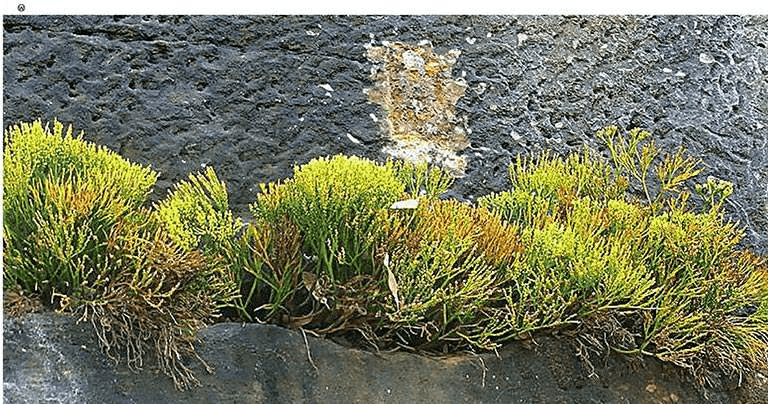
According to existing fossil data, gymnofern is a small herb with a simple structure. It has an upright stem with a height of 20 to 50 centimeters long on the recumbent underground stem, with bifurcated branches at the top, and sporangia grows on the top of the branches without leaves. The surface of the stem has a cuticle and breathing stomata, and the interior has structures that support the plant and transport water. But its roots are just artificial roots with weak water absorption capacity, so they can only live in a humid place.
Since the successful landing of naked ferns, the field of plant life has begun to expand from water to land. This is a revolutionary leap, entering a new stage completely different from previous history, and creating conditions for animals to land. By 350 million years ago, major changes in the earth's crust occurred, the climate became more arid, the naked ferns gradually became extinct, and other higher plants with more complete structures differentiated from the naked ferns gradually became the master of terrestrial plants. The pine leaf ferns in southern China are surviving descendants of the ancient naked ferns.