
Why is the air not empty?
Although the air is called "empty" qi, it is actually not empty. In 1771, Swedish pharmacist Karl Scheler loved to fiddle with bottles and cans, and always loved to explore chemical secrets while dispensing medicines. On this day, he threw a piece of yellow phosphorus into an empty bottle. The yellow phosphorus spontaneously ignited in the air. After burning, the bottle filled with white smoke, producing a large amount of fine white powder of phosphorus pentoxide.
Because the bottle was plugged and the air in the bottle was limited, the yellow phosphorus burned fiercely but soon went out. Scheler turned the bottle upside down in the water and opened the stopper. The water automatically rose to about 1/5 of the bottle and stopped. He repeated it many times, and the results were consistent. He suspected that there was other gas in the bottle after burning.
Scheller carefully stuffed the bottle in the water and took it out of the water. He then put yellow phosphorus in it. The yellow phosphorus no longer spontaneously ignites; when he put in a little mouse, it quickly died.
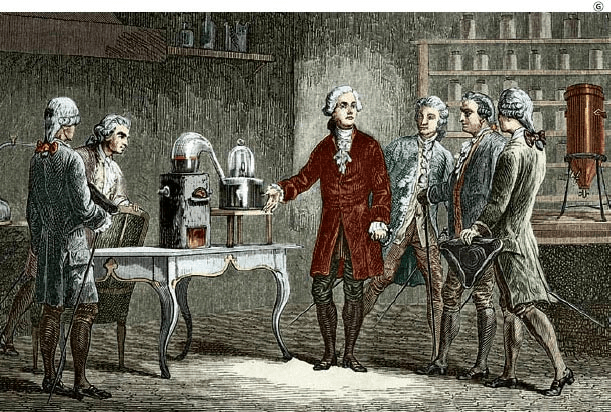
This incident attracted the attention of the French chemist Lavoisier. He continued his research and finally found out: 1/5 of the lost gas was oxygen (O ˇ), and the rest was nitrogen (N ˇ). Oxygen can support combustion, but nitrogen does not.
Later, scientists determined that dry air by volume: oxygen accounted for about 21%, nitrogen accounted for about 78%, inert gases accounted for about 0.94%, carbon dioxide accounted for about 0.03%, other impurities accounted for about 0.03%, and also contained a small amount of water vapor and dust.