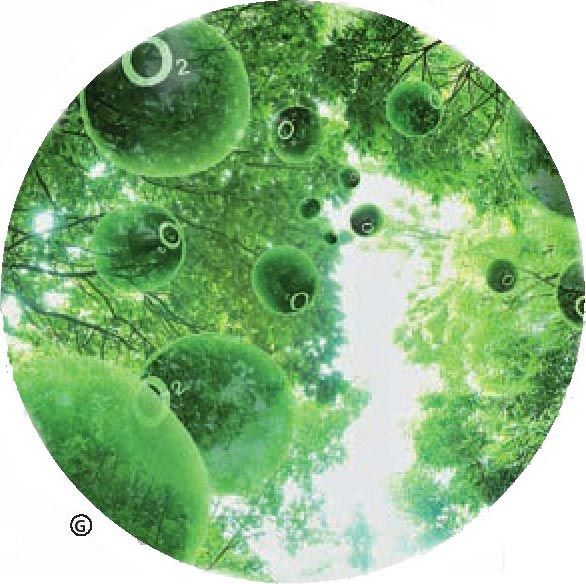
Will the earth run out of oxygen? Every day, whether it is people, animals, crops or stove chimneys on the earth, they absorb oxygen and spit out carbon dioxide. Plants provide oxygen to the earth through photosynthesis. In the long run, won't the oxygen be used up and the world become a world of carbon dioxide? Swiss scientist Scheniber once conducted such an experiment: he collected green leaves of some plants, dipped them in water, and placed them in the sun. Soon, the green leaves kept spitting out small bubbles, and Sheniber used a test tube to collect the gases. What are these gases? When Sheniber stuffed a piece of wood that was lit into a test tube, the piece burned violently and shot out a dazzling light. It turned out that oxygen was collected in the test tube, because oxygen could help combustion. Then he pumped carbon dioxide into the water. He found that the more carbon dioxide was pumped in, the more oxygen the green leaves expelled. Scheniber concluded that plants, under the influence of sunlight, rely on carbon dioxide to produce nutrients and release oxygen. It turns out that the vast forests, grasslands, and crops on the earth hide such a secret: in the sun, the chlorophyll in the green leaves of plants absorbs carbon dioxide in the air, combines with water and nutrients transported from the roots to turn into starch, glucose, etc., while releasing oxygen, which is called "photosynthesis." Every year, green plants around the world absorb tens of billions of tons of carbon dioxide from the air! Therefore, although oxygen is always consumed, it is also constantly produced. As long as the green homes on earth are protected, oxygen will never be used up, and the world will never become a world with only carbon dioxide.
Will the earth run out of oxygen?
In response to the question of 'Will the oxygen on the earth be used up?' This paper uses the green leaf experiment of Swiss scientist Scheniber to confirm that plants can release oxygen through chlorophyll and use carbon dioxide for photosynthesis in the sun. The oxygen consumed can be continuously replenished by green plants., so the oxygen will not be exhausted.