
Humanity has sent various detectors into outer space, but its understanding of the earth's interior is very limited. To date, the maximum depth humans have reached in drilling into the earth's interior has only reached just half of the continental crust. If the earth is compared to an egg, human drilling downward has not even broken the egg shell.
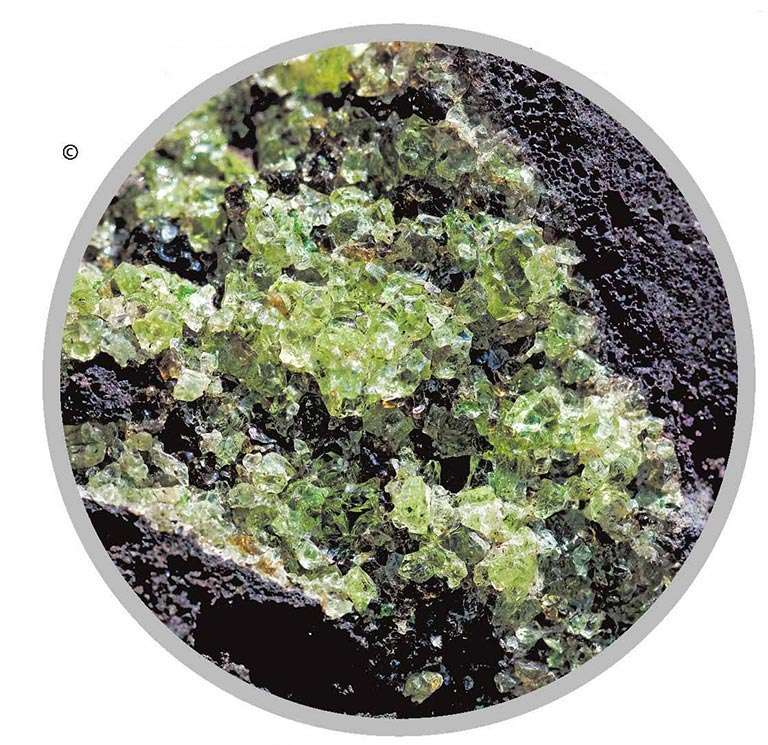
However, surface rocks, seismic waves and simulated high temperature and high pressure experiments have revealed some secrets of the earth's interior. Many rocks on the surface were formed deep in the earth, but are now exposed on the earth's surface. Studying the chemical composition and formation reasons of these rocks can help people understand the chemical composition, temperature, pressure and other information of the earth's interior. In addition, when magma erupts rapidly upward from the depths of the earth, it has the opportunity to capture much of the rock around the ascent channel, often called xenoliths. Some rocks come from more than 200 kilometers underground, far beyond the depths reached by human drilling deep. For example, there are a large number of basalts of different eras in Shandong, Liaoning and Jiangsu in China. There are many mantle peridotite xenoliths in these rocks, which can tell us what kind of rocks are dozens of kilometers below our feet. The seismic waves produced by earthquakes have caused huge disasters to mankind, but they are also an important tool for studying the earth's internal structure. Just as hospitals often use ultrasound waves emitted by B-ultrasound to examine human organs, seismic waves help us "see through" the earth and see the layered structure hidden inside the earth. For example, in an earthquake that occurred at the southern tip of South America, seismic waves can pass through the core of the earth and reach Alaska in North America. If people collect seismic waves in Alaska, they can back-extrapolate information about the earth's inner circles. Because the heat from the formation of the earth has not been completely lost, and radioactive isotopes such as uranium and thorium decay in the earth to produce a large amount of heat, the temperature inside the earth increases with the increase of depth, and can reach more than 3000℃ at most. Therefore, scientists use high-temperature and high-pressure (up to more than 1 million standard atmosphere pressure) equipment to simulate the environment inside the earth and speculate on which minerals exist in various layers of the earth's interior, as well as their composition and density.
Based on various data, we now know the main components of each layer of the earth. The earth's crust on land is mainly composed of minerals such as feldspar and quartz, and the main components are oxygen, silicon, and aluminum; the earth's crust in the ocean is mainly composed of basalt, which has a lower silicon and aluminum content than the land's crust and a higher iron and magnesium content. The mantle is mainly composed of peridotite, the most important minerals being olivine, garnet and periclase. It is precisely because the mantle is denser than the continental crust that the continental crust can float above the mantle, providing shelter for terrestrial organisms. The main component of the earth's core is iron. However, geophysical research shows that the density of pure iron is greater than that of the earth's core, so there are also some lighter elements in the earth's core, such as nickel, sulfur, silicon, etc. The earth's core is divided into two layers. The outer core is a metal melt, and the inner core is a metal solid. These are our current general understanding of the composition of the earth's interior.