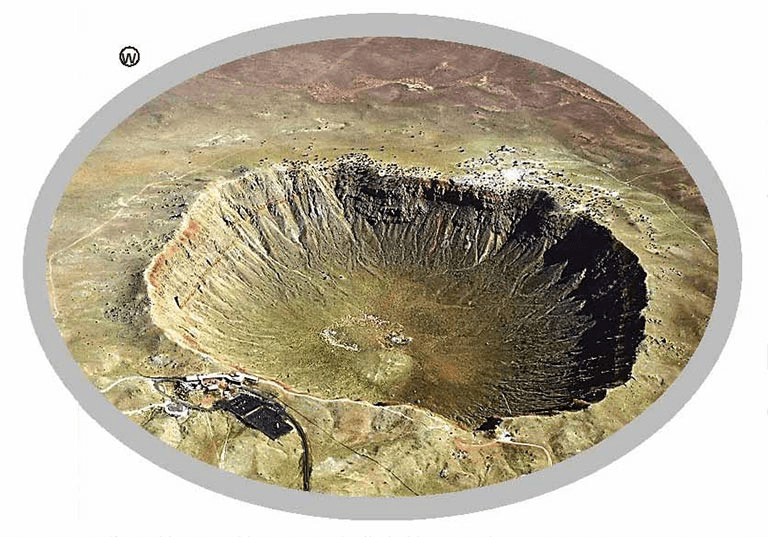
What is the Earth's childhood like? The Earth's current climate is mild and suitable for living, but its "childhood" is troubled and difficult. It is subject to high temperature baking and meteorite impact, and is not suitable for any living thing at all. The earth had a high fever during its childhood: nebulous material condensed and proliferated, and the violent collision of planets converted gravitational potential energy into heat energy; when the earth grew and formed an iron-nickel metal melt that sank towards the center of the earth, gravitational potential energy was also converted into heat energy; Radioactive isotopes decays release huge heat energy. Under the joint action of the three, the surface temperature of the earth in childhood reached above 2000 degrees Celsius (about 1700℃), forming a huge and hot magma sea. Such an environment is not conducive to the formation of life. The earth was often hit by meteorites in its childhood: a large number of meteorites left in the solar system hit the earth. Although most of the traces have disappeared, the lunar craters suggest the harsh environment in the early days of the earth's formation. It was not until about 3.8 billion years ago, when the largest impact ended, that the earth was relatively peaceful. Although major impacts that caused biological extinction have occurred several times since then, life on earth has developed and evolved tenaciously, and every major extinction has provided opportunities for vulnerable biological groups to grow and grow.
What is the earth's "childhood" like?
The earth's "childhood" was full of disasters. It was baked at high temperatures and hit by meteorites. The surface of the earth formed a magma sea above 2000 degrees Celsius (about 1700℃), which was not suitable for life. After the large-scale impact ended 3.8 billion years ago, the earth became slightly more peaceful. Although there were small impacts in the future, life evolved tenaciously and mass extinctions also provided development opportunities for vulnerable organisms.