
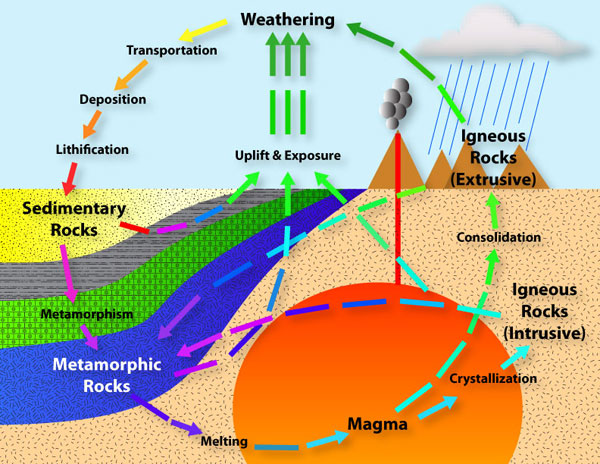
In the vast nature, the prosperity and decline of all things must have a beginning, and rocks are no exception. There are three types of rocks on the earth: igneous rocks, sedimentary rocks and metamorphic rocks. When magma cools and consolidates, igneous rocks are formed; when sediments are compacted, consolidated and recrystallized, sedimentary rocks are formed; when the mineral composition and structure of the original rocks change due to changes in temperature and pressure conditions, new metamorphic rocks are formed.
Therefore, rocks also have ages. Scientists have discovered the oldest rock on the earth in Australia, confirming that it is 4.4 billion years old; volcanic activity and sedimentation that occur all the time on the earth have created the youngest new rock.
The reason why we want to study the age of rocks is that no one witnessed the history of the earth hundreds of millions of years ago, and rocks have become the most important record left during the evolution of the earth. Changes in rocks can often reveal major events in the Earth's evolution. For example, the oxygen content in the early ocean was very low, and there were free ferrous ions in the seawater. These ferrous ions were deposited due to environmental changes, forming widely distributed strip-like magnetite quartzite; when the Himalayan orogenic belt was formed, the crust was highly squeezed to form high-grade metamorphic rocks. While understanding what events have happened on earth through rocks, we naturally also understand when these events occurred.