
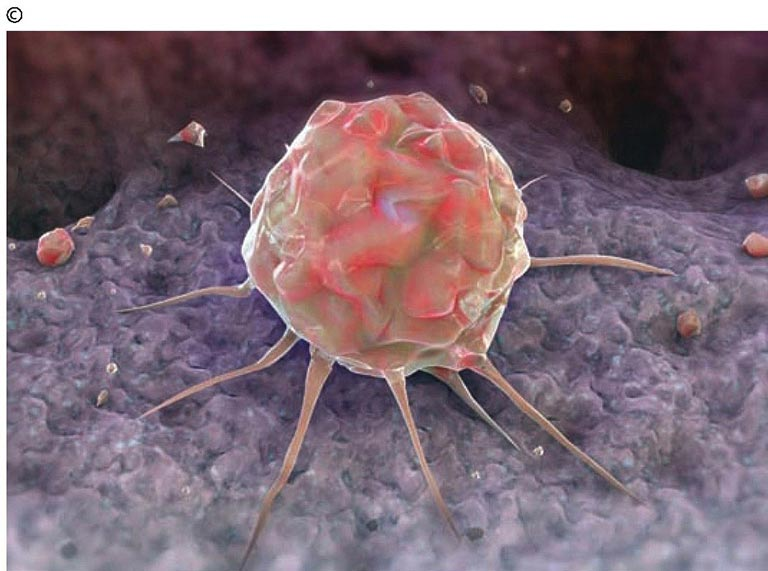
Are "stem cells""dehydrated cells"?
The name stem cells conjures up memories of crispy vacuum-dried fruit slices, dehydrated vegetable bags in instant noodles, and lifelike bottled dried flowers in stores. So are stem cells "dehydrated cells"? No, if the cells are dehydrated, their function will be affected at least, and they will die at worst.
In fact, in the term "stem cell","stem" is not the "stem" of "dry", but the "stem" of "trunk". A "stem cell" is such a "tree stem cell" that can germinate into many different types of "cells" branches.
There are more than 200 cells in the human body. There are red blood cells that carry oxygen, small intestine villous epithelial cells that absorb nutrients, photosensitive cells that are used to view everything in the world, and cardiomyocytes that make the heart beat. All these different types of cells are differentiated from the original cell of the fertilized egg. It's like a big tree that first has a trunk and then grows branches and leaves and flowers. Because fertilized eggs can continuously "branch" to form various cells in the human body, we call them "tree stem cells", or "stem cells" for short. Because fertilized eggs can form all types of cells in the body, they are named "totipotent stem cells."
The fertilized egg gradually develops into a complete life and forms cells of various tissues. There are some "left-behind troops""stationed in various organizations. Although these cells cannot become all types of cells in the body like fertilized eggs, they retain the ability to form multiple or one other type of cells. Therefore," left-behind troops "cells are like tree stem cells that can still branch. However, they cannot be called "all-powerful stem cells." Those that can form multiple cells are called "pluripotent stem cells", and those that can form one type of cell are called "all-powerful stem cells."
Many cells in living organisms continue to die. For example, the outermost epithelial cells of human skin have to be replaced every 28 days or so due to constant wear and tear from the outside world; the epithelial cells of the small intestine villi that absorb nutrients have been immersed in food residue and digestive juice, and have to be contacted with the small intestine. A large number of bacteria come into contact and are constantly rubbed by the peristalsis of the small intestine. Their life is extremely short, and they have to be replaced every two or three days. These "short-lived" cells will have to be replaced by "pluripotent" or "multipotent" stem cells. When cells need to alternate with the old, these "pluripotent" or "multipotent" stem cells proliferate while changing into the new cells needed and replenished in time.
However, the number of "multipotent" or "multipotent" stem cells in each organization is limited. If they cannot be replenished, won't one and one less stem cells be used up, and they will be used up sooner or later. Fortunately, stem cells also have another "ability", which is to retain their "true body". That is to say, when stem cells divide, two different cells can be produced: one is used to produce replacement cells, which constantly proliferates and changes, and finally forms thousands of replacement cells; the other remains unchanged, exactly the same as the original "true body" of the stem cells. Copying yourself in this way of "asymmetric division" not only meets the need to replenish dead cells, but also makes stem cells "inexhaustible."
Although stem cells have these abilities, they can only play a role when the body is normal. In some disease states, they are "willing but unable to do so." For example, in people with type 1 diabetes, there are not enough insulin-producing cells in the pancreas, but stem cells cannot completely replace them; in patients with myocardial infarction, the large number of cardiomyocytes that die due to ischemia are often not completely replaced; in people with Parkinson's disease, many of the cells in the brain that secrete dopamine (a substance that carries neural information) have died, but the patient's brain cannot effectively replace them. If we can "activate" stem cells in the body, or introduce new stem cells from outside the body, we may be able to treat these diseases.
In fact, people are not satisfied with just replacing cells. For example, many blind people need corneal transplants to restore vision, patients with renal failure need kidney replacement, and patients with liver necrosis need liver transplants. However, these tissues and organs can only come from donations from other people. Every year, many patients die because they cannot wait for organs. Since stem cells can differentiate into all types of cells, if the patient's own stem cells can be used to grow ready-made cornea, skin, blood vessels and even heart in vitro, then whatever organ you want and what organ you can replace, and you can avoid tissue rejection caused by allogeneic organ transplantation. What a tempting prospect this is!