
When the boy reaches the age of twelve or thirteen, his testicles and scrotum rapidly expand, a sign of entering puberty. When men enter puberty, a type of somatic cell in the testis called spermatogonia begins to divide in two. When one cell divides once to produce two cells, the cells before and after division have two genomes. Each spermatogonia cell divides 6 times in a row to form 64 primary spermatocytes. Each primary spermatogonium cell undergoes meiosis and eventually produces 4 sperm cells. Each spermatogonium cell undergoes 6 mitosis and 1 meiosis to produce 256 sperm cells. It takes about 64 days for sperm cells to become sperm with heads, bodies and tails.
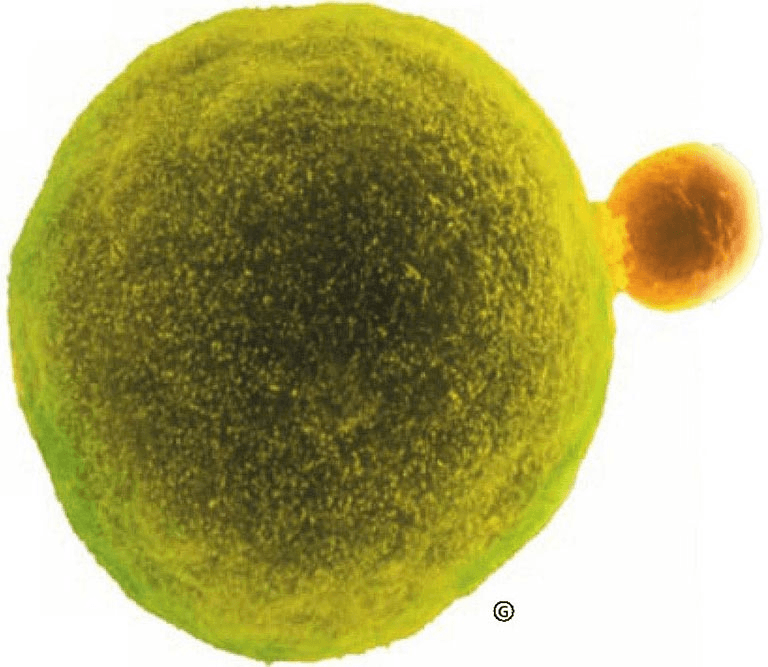
Unlike men, women already have oogonia during the embryonic period. When the baby girl is born, the oogonia in the immature ovary has become a primary oocyte, every chromosome has been replicated, and every pair of homologous chromosomes has been paired. After homologous chromosomes are paired, the cells do not divide temporarily. After the ovaries of girls aged 10 to 14 years old mature, the primary oocyte will be divided into two and undergo meiosis into two cells of different sizes. The large one is the secondary oocyte, and the small one is the first polar body. If the secondary oocyte welcomes sperm in the fallopian tube, it will be divided into two cells after the sperm enters and undergo meiosis. The sister chromatids will separate and divide into two cells, one large and the other small. The largest is the egg cell. After maturity, it is an egg, and the smaller is the second polar body. A woman's reproductive period is about 45 years, and she only ovulates once a month, that is, only one primary oocyte divides into secondary oocytes and polar bodies every month. Women have about 1000000 primary oocytes at birth, and only 400 to 500 can become secondary oocytes during the reproductive period. The vast majority of primary oocytes naturally shrink or degenerate very early.