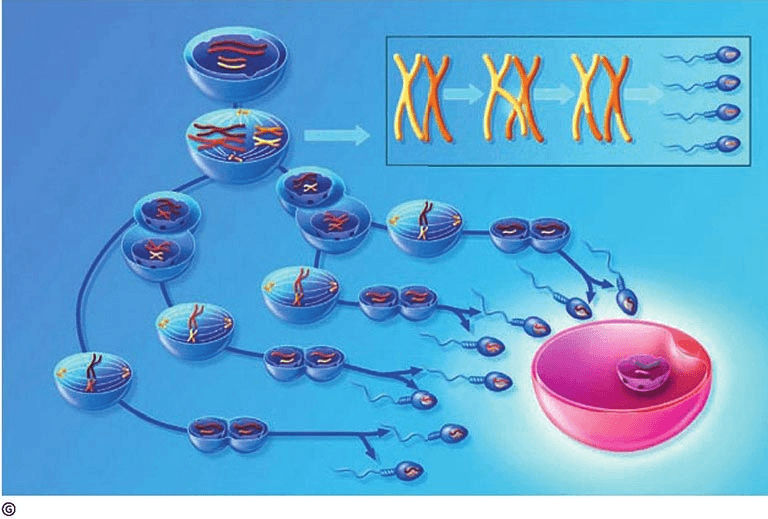
Why is there only one genome in sperm and egg? As we all know, a human genome consists of 23 different chromosomes. All somatic cells in the human body have 2 genomes, of which the same two chromosomes are called homologous chromosomes. If you are a girl, there are 46 and 23 pairs of homologous chromosomes in your cell, with 2 pairs per pair; if you are a boy, although there are also 46 chromosomes in your somatic cell, there are only 22 pairs of homologous chromosomes. This is because compared with the X chromosome and Y chromosome of the same sex chromosome, the Y chromosome is much shorter than the X chromosome, so X and Y can only be regarded as part of the homologous chromosomes. Unlike somatic cells, female eggs and male sperm both have only one genome. Why? It turns out that this is caused by meiosis of somatic cells. The so-called meiosis is cell division that halves the genome of a newborn cell. The process in which a female primary oocyte divides to obtain an egg, and a male primary sperm cell divides to obtain sperm, is meiosis. Meiosis is a relatively complex and continuous process. From beginning to end, it goes through chromosome duplication, homologous chromosome pairing (also called synapsis), cell bisecting and homologous chromosomes separating, cell bisecting again and sister chromatids separating. Four steps. Chromosome duplication is when one chromosome becomes two identical. However, chromosome duplication during meiosis is a bit special, that is, after duplication, two identical chromosomes are not completely independent, but are connected by a part called the centromere, like two pieces connected by a rivet on a pair of scissors. Two chromosomes connected by the same centromere can only be called chromatids because they are not independent, and two chromosomes connected by the same centromere are called sister chromatids. After chromosomes are replicated in anaphase meiosis, they enter the pairing phase of homologous chromosomes. Each of the two paired chromosomes has two sister chromatids. It can be seen that although a paired pair of homologous chromosomes has only two centromeres, it has four chromatids. After the chromosomes are paired, the cell is divided into two. At the same time, the two members of the paired homologous chromosomes each rush to different cells. Of the two cells divided from one cell, there is only one chromosome set. Or, the chromosome set has been halved. After the cells are divided into two cells with halved chromosomes, each cell will undergo another division. At this time, the sister chromatids in each chromosome will separate and enter different cells. In the end, two cells with only one genome were obtained from four cells with only one genome. If these four cells are produced by primary sperm cells, they are all sperm cells. If they are produced by primary oocytes, then only one of them is an egg cell.
Why is there only one genome in sperm and egg?
This article explains the reason why sperm and eggs only contain one genome: human somatic cells have two genomes, female cells contain 46 23 pairs of homologous chromosomes, and male cells contain 46 22 pairs of homologous XY; the single genome of germ cells originates from meiosis, which halves the genome, including steps such as chromosome duplication and synapsis.