
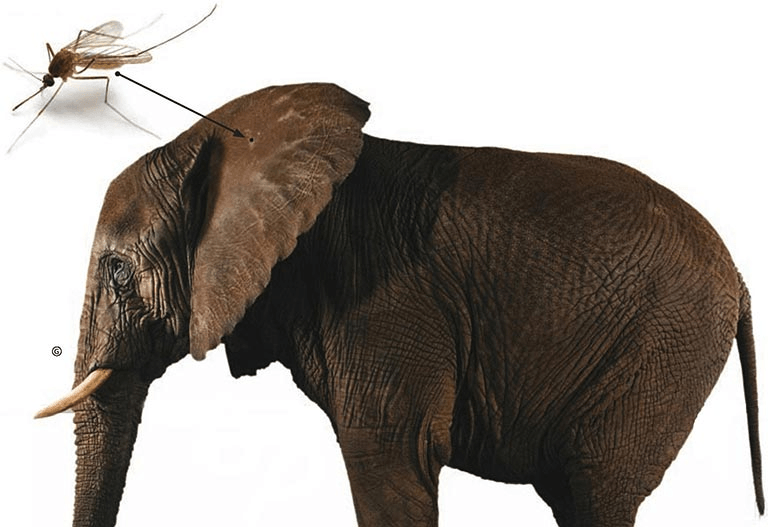
The earth is home to a wide variety of birds and beasts, fish, birds, insects, algae, trees, flowers and plants. It is really colorful and variegated. Among them, the big ones are like elephants and whales, and the small ones are like mosquitoes and mosquitoes and bacteria. They are vastly different in size and have different shapes. On the surface, different organisms bear no similarities to each other.
But one day in 1838, the German botanist Schleidan and his compatriot, zoologist Schwann, were dining at the same restaurant. They chatted casually and coincided when exchanging research on plant cells and animal cells. They agreed that research results on plants and animals show that their basic structural unit is a cell. The two people were enlightened! In the years that followed, their thinking became clearer and clearer, and finally formed a systematic view: each cell is a relatively independent living unit and the basic structural unit of an organism; a cell is the smallest unit of all organisms such as animals and plants. Function, that is, the metabolism of an organism takes place within the cell; cells can produce cells, the increase of cells depends on cells, and the reproduction of organisms also depends on cells, that is, cells are the reproductive unit of any organism. These three aspects were later called cell theory.
Although there is a large difference in size, the size of elephant somatic cells and mosquito somatic cells is not so different. The establishment of cell theory has opened up a new and broad field that has greatly helped humans understand themselves and discover nature. Engels even called cell theory, the laws of energy transformation and conservation, and evolution the "three major discoveries" of natural science in the 19th century.