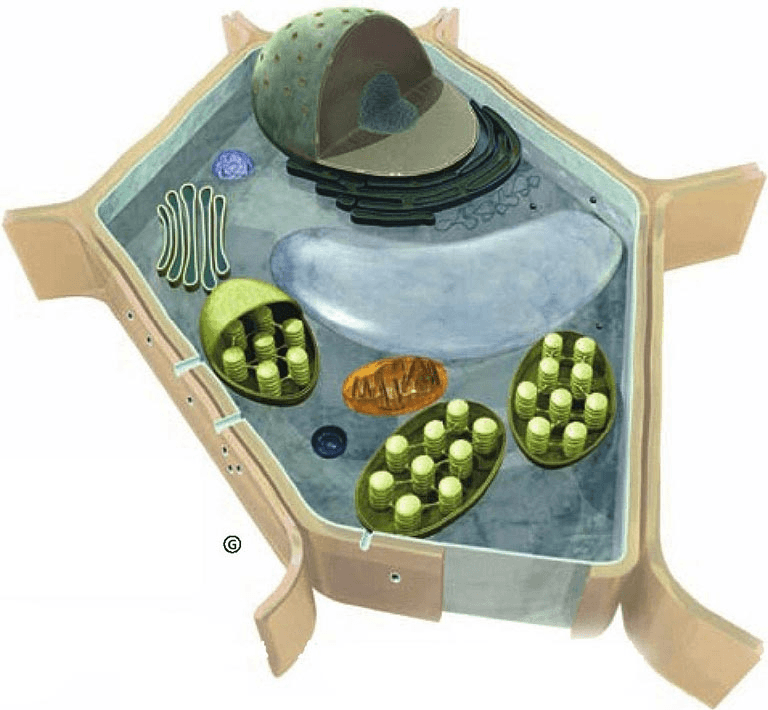
Why natural selection created single-celled animals and single-celled plants Darwin believed that when the same organism lived under the same conditions, natural selection could proceed in different directions, so that the same organism would produce different descendants. In the primitive ocean about 2.5 billion years ago, the number of primitive single-celled organisms continued to increase, and the consumption of ready-made organic matter was increasing. Food was in short supply, and death was increasingly approaching primitive single-celled organisms. At the same time, more and more carbon dioxide was released by primitive single-celled organisms during the process of digesting and decomposing food. The increase of carbon dioxide created conditions for photosynthesis. Euglena is somewhere between plants and animals. It can both photosynthesis and move freely, like both animals and plants. At this time, at least two types of mutations occurred in primitive single-celled organisms: one type is single-celled organisms with thin cell membranes. The cells of these organisms can roll with the flow of cytoplasm, and some can also extend "pseudopods". Just like growing feet, these mobile cells can continue to forage in a new place after consuming ready-made food around them, while those cells that cannot move can only wait to die in situ; Another type of mutated unicellular organisms are unable to move, but they have chloroplasts in their bodies and a thick wall outside the membrane. Because they can make organic matter on their own to feed themselves, they do not have to rely on ready-made organic matter and truly achieve "self-sufficiency." The organisms produced by these two types of mutations won the competition for survival, and their descendants were able to reproduce and grow. Scientists speculate that this is how the same primitive single-celled organism produced primitive single-celled animals and single-celled plants through natural selection. This is how the ancestors of the amoeba, paramecium and chlorella we see today may come from the same primitive single cell. In current plant cell models, chloroplasts in the cytoplasm make plants truly "self-sufficient"
Why natural selection created single-celled animals and single-celled plants?
This paragraph explains how natural selection creates single-celled animals and plants. It mentions Darwin's point of view that 2.5 billion years ago, single-celled organisms in the primitive ocean showed two types of mutations due to lack of food and increased carbon dioxide. Natural selection won and multiplied, forming primitive single-celled animals and plants, amoebas, etc. or their descendants.