
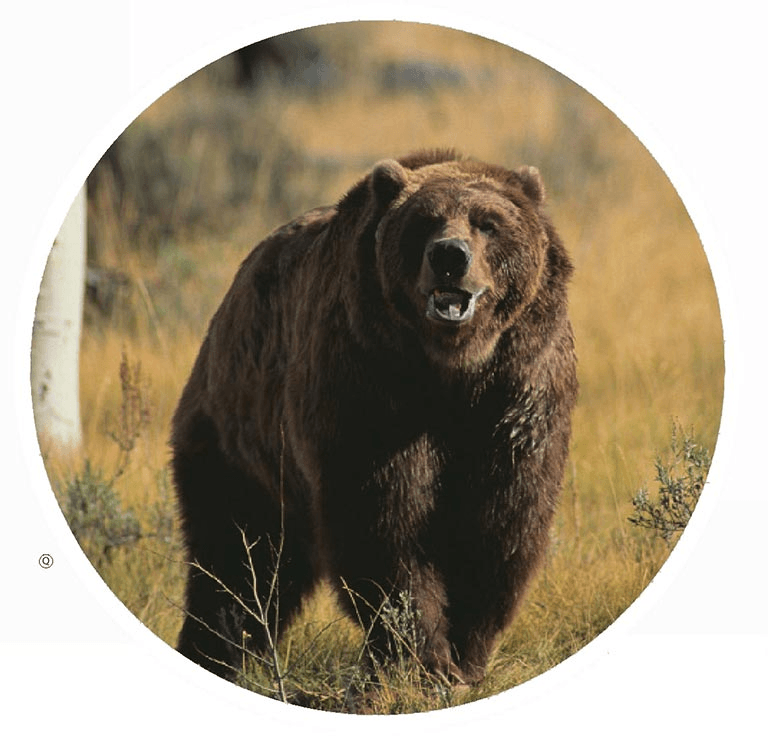
There is a fable that has been passed down for more than two thousand years: Two very good friends met a bear. One of them quickly climbed a tree and hid, and the other had no hope of escaping. With an inspiration, he lay on the ground, holding his breath and playing dead. The bear walked up to him, sniffed it, turned and left. The friend came down from the tree and asked the bear why he had left. The man said,"The bear told me to be careful in the future not to walk with friends who can't share weal and woe." But when encountering a bear, is playing dead really useful?
To be honest, it depends on what the bear thinks. You can imagine the level of nervousness when you encounter a wild bear. Unless you faint from fear, it is too difficult to pretend to die dead. Let's not talk about whether people will tremble because of nervousness and fear, but at least their heartbeat will accelerate and their bodies will be warm. Can't a bear with a very sensitive sense of smell and feeling see through it? If the bear chooses to leave, it only thinks that the person is not a threat, and it is not actually hungry, so it cannot be interested; if it is interested, it will rub it with its big head and turn the person over and over with its claws. If you encounter this kind of situation, you should endure it. Don't open your eyes and move around, otherwise it will be troublesome to scare the bear... If it becomes very playful and sits on it to rest for a while, then consider yourself unlucky... If it is lucky, the bear is really not interested in you and will leave in a flash. Please lie down for a while longer and wait for it to go away... The bear will never turn around and leave just because the other person is dead, because the bear is not disgusted with carrion meat, and who would refuse a pile of meat in his mouth?
In the wild, it is best to deal with it according to circumstances. If you find a bear in the distance and the bear does not notice people, do not make any sound and slowly retreat downwind to prevent the smell from being transmitted to the bear with the wind. Don't throw away empty cans, food residues, and don't carry objects with a strong smell in the forest. That may attract many animals, including bears, to "visit" them.
If a bear suddenly appears in front of a person from a hidden place, it is a warning. There may be food or bears behind it that need protection. If it continues to move forward or stays put, it may attack. Don't keep an upright posture at this time. Bears often stand up before attacking. Standing upright in the eyes of bears may be a provocation. Adjust your breathing, face it calmly and slowly and retreat, and don't show fear. Whether it is a person or an animal, we admire courage. Don't do unnecessary actions. Any incomprehensible actions will cause it to feel uneasy. Be careful not to fall, let alone turn around and run. That will downgrade you from an equal opponent to a loser and cause it to chase. People may be injured as a result, and the injured person may be further relegated to prey.
If the bear has decided to attack, it is quite dangerous. If you encounter a huge adult brown bear, you can find a big tree and climb up quickly, and then find a way to ask for help. If it is a smaller bear, its ability to climb trees is stronger than a human, and you will die when you climb a tree. In this case, you can escape down the mountain. The speed of the bear going down the mountain is slower than that of the mountain, but objectively speaking, people can't outrun the bear many times. If you really can't escape or dodge, you can only fight. Pay attention to protecting its throat and neck. You can try to attack its sensitive nose. This is also a helpless move.
The best way is, of course, to stay away from places where bears often haunt. If the bears do not invite them, you will not enter their territory.