
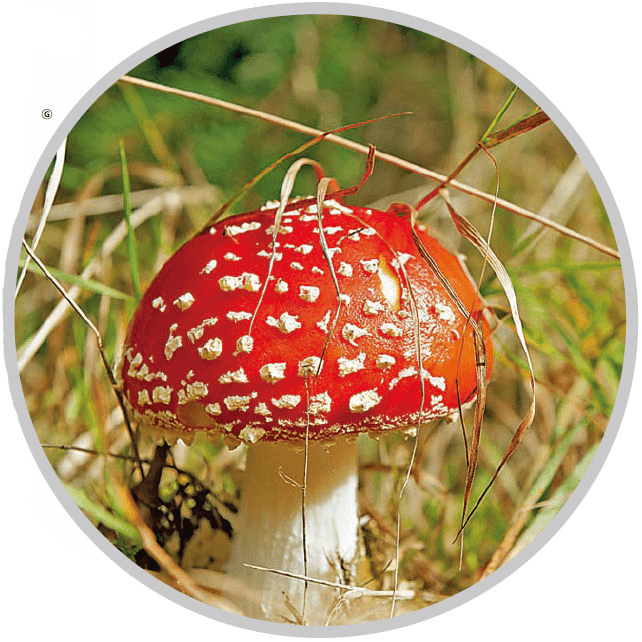
Don't think that picking mushrooms is as easy as it is sung in the song "The Little Girl Who Picking Mushrooms". It's very dangerous to put mushrooms into a basket when you see them. Because although mushrooms are delicious and delicious, a few mushrooms contain terrible toxic substances. On our planet, there are thousands of mushroom species, most of which are non-toxic and a few are toxic. However, many poisonous mushrooms and non-toxic mushrooms are very similar in appearance. Their size, shape, color, and cover are almost identical. Only professionals can identify them, but they are easy to be confused by ordinary people.
In most people's minds, the more beautiful and colorful the mushroom is, the more toxic it is. Especially the toad fungus, which often appears in many literary storybooks, is the most typical example. In fact, this concept is unreliable. "The brighter and more beautiful the mushroom, the more toxic it is, while the unpretentious mushroom is non-toxic." This statement does not hold true. Because there are many brightly colored members among the edible fungi, such as bright red Russula and orange-yellow egg yolk fungus, which are both delicious edible fungi; on the contrary, the unremarkable appearance of poisonous amanita fungus, but it has super toxicity.
Since it is not possible to identify whether a mushroom is poisonous by its bright color, are there any identifying characteristics to distinguish between toxic and non-toxic mushrooms? Experienced fungus experts tell us that most toxic toadstool will have scattered scales and coated residues on the surface of the lid. Relatively speaking, flat and smooth fungi are safer, but this is only an empirical identification rather than a completely strict identification and differentiation. In particular, if you are not sure of the type of mushroom, it is best not to eat it. This is the highest criterion for not being poisoned by eating mushrooms. No matter what circumstances, you should be extremely vigilant about the fungi you collect. If you find any inconsistency between the "delicious food" in your hand and the bacteria you are familiar with in appearance, habits, or population, don't move your mouth. Secondly, when collecting, you should carefully study the mushroom species. In addition to the fungus you want to collect, you should also see if it has very similar "poisonous relatives". For example, Uphora luminosa and Hyphora flavum are both flat yellow mushrooms in appearance, but the former is toxic, while the latter is edible.
Different poisonous mushrooms have different toxicities and cause different harm to the human body after being eaten by mistake. For example, amanita venom can damage the liver and kidney of the human body. People develop symptoms later after eating it by mistake, develop slowly, and are easily misdiagnosed and die. Boletus retinospora, Russula, etc. damage the human stomach. This type of poisoning is the most common. Fortunately, the course of disease is short and the mortality rate is low. Boletus microcosm, Boletus granulosa, etc. damage the nerves of the human body. Those who eat them by mistake will experience neurotoxic symptoms such as mental excitement, mental depression or mental confusion. They will also experience parasympathetic symptoms such as vomiting, diarrhea, sweating, tearing, and heart rate slowdown., and even hallucinations, so they are often misdiagnosed as "mental illness" and delayed treatment. Fungi of the genus Ceramaria have hemolytic and destructive effects. In addition to gastroenteritis, those who eat it by mistake also have symptoms such as acute anemia, hemoglobinuria, uremia, and hepatomegaly. Ototis phylloides, gum tops, etc. can cause photosensitive dermatitis in the human body, while accidental consumption of fungi such as Russula subrainosa can cause symptoms such as respiratory paralysis, toxic myocarditis, and acute renal failure.