
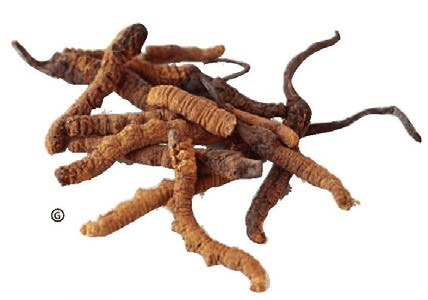
Cordyceps sinensis, also known as Cordyceps sinensis or Cordyceps sinensis, is a precious traditional Chinese medicine. The name is very strange. It sounds like half insects and half grass. In fact, Cordyceps sinensis is neither an insect nor a grass, but an insect and fungus combination formed by some fungi parasitic on insects.
This is a fungus belonging to the Ascomycetes, the family Lycephariaceae, and Cordyceps, and likes to parasitize the larvae of an insect called the bat moth. When late spring and early summer come, the bat moth lays its eggs underground and then allows them to hatch and develop into larvae like silkworm babies. At this time, the spores of Cordyceps fungi will penetrate into the ground through rainwater. Once they encounter the larvae of Hapmoth, the spores will invade the larvae and become parasitic. At first, the fungal spores did not hinder the growth of the larvae, and the insects could still live normally. Later, the spores germinated in the larvae and produced many mycelia, desperately absorbing the nutrients of the larvae. While the mycelium reproduces and grows in the worm, the larvae also slowly grow and drill out of the ground until the mycelium reproduces and fills the worm body, causing the larvae to die. It is winter, which is the so-called "Cordyceps sinensis". The following year, when the temperature rises at the turn of spring and summer, the mycelium will slowly germinate from the head of the "Cordyceps sinensis" and grow a rod-shaped constellation like grass, called "Cordyceps sinensis".
The head of the rod-shaped substratum of the fungus contains the ascothecum, which is a pot-like structure composed of many ascots, which contain spores. When the ascots mature, the spores will spread out and find the larvae of the bat moth as hosts again. This is the cyclical life cycle of Cordyceps sinensis.