Will new supercontinents emerge in the future?
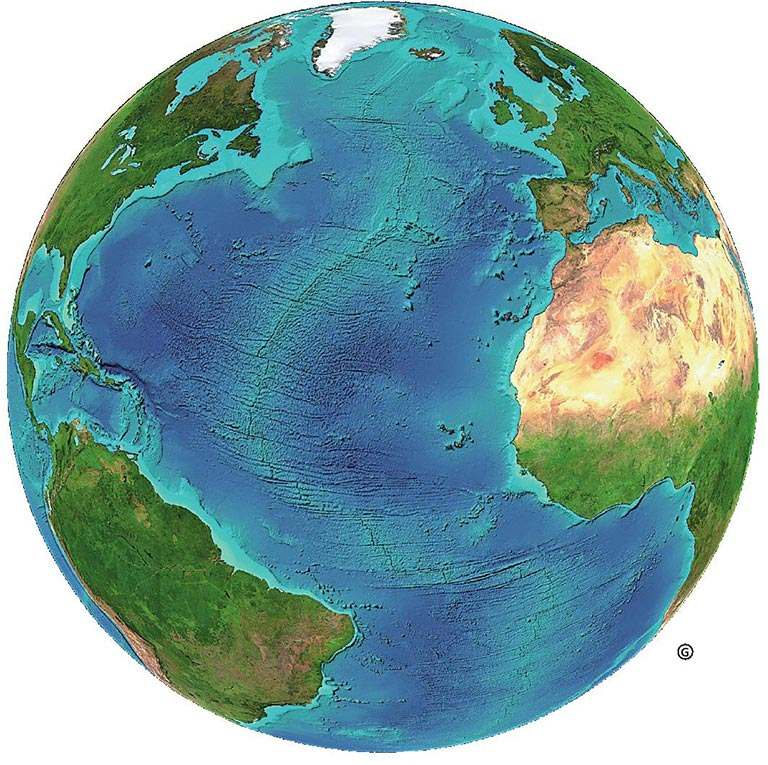
This article focuses on the question of whether a new supercontinent will emerge in the future, pointing out that since the earth's plate has always been moving slowly at a speed similar to the growth of fingernails, after tens of millions to hundreds of millions of years of accumulation, most continents on the earth may reunite to form a new supercontinent called "America-Asia", and introduces three different views of the academic community on the formation and location of "America-Asia".
What impact will the opening, closing and closing of continents have on the earth?
This paper focuses on the impact of continental division, division and combination on the earth, pointing out that the aggregation and division of supercontinents have a profound impact on the earth system. Relevant hypotheses put forward by scientists link it to climate and life evolution such as the "Snowball Earth" ice age and the Cambrian explosion.
Why does the mainland divide and merge?
The article "Why Continents Divide, Divide and Reunite" focuses on the issue of continental division, division and reunite. It introduces the proposition of the "continental drift" hypothesis and the composition of the pan-continent. It lists many prehistoric supercontinents in the history of the earth, and explains the controversial "supercontinent cycle" hypothesis. Based on the theory of plate tectonics, it explains the mechanism of supercontinent aggregation and disintegration and the two possible paths of reaggregation after continental drift.
Why does Hainan Island face Eurasia across the sea?
This paper focuses on the question of "why does Hainan Island face Eurasia across the sea?" and points out that although Hainan Island belongs to Eurasia, it faces the Leizhou Peninsula in Guangdong Province across the Qiongzhou Strait. It also introduces three main views in the scientific community on the origin of the Qiongzhou Strait, namely, the theory of tectonics, the theory of sea erosion and the theory of post-glacial transgression events.
Why is there an island arc on the west side of the Pacific and a mountain range on the east side?
This paper focuses on the question of "why is there an island arc on the west side of the Pacific and a mountain range on the east side?", introduces the different names of the Rim Pacific structural belt, and uses plate tectonics to explain the difference in subduction models of the Pacific plate to both continents, which leads to the formation of an island arc on the west side and a mountain range on the east side. It also discusses the possible reasons for the differences in subduction models, as well as the development driving forces and termination conditions of the Rim Pacific structural belt.
Why are there so many mountains on earth?
Focusing on the question of "why are there so many mountains on the earth", this paper introduces the definitions of mountains and orogenic belts and the division of plates. By explaining the mechanism of the interaction of three types of plates to form orogenic belts and the causes of intracontinental orogenic belts, it explains the reasons why there are so many mountains on the earth.
Why is there a Great Rift Valley in East Africa?
Focusing on the question of why there is a Great Rift Valley in East Africa, this paper introduces the scale, shape and branches of the Great Rift Valley in East Africa, as the largest continental rift system on earth, and expounds two different hypotheses and evolutionary predictions about its formation mechanism based on plate tectonics theory in the scientific community.
Why does the land have ancient rocks but not the ocean floor?
Focusing on the question of why there are very ancient rocks on land but not on the ocean floor, this paper introduces the definition, scope and composition of the continental crust and the oceanic crust. By explaining the life journey of the oceanic crust from the new generation of the mid-ocean ridge to the subduction and extinction of the trench, and the characteristics of the continental crust. The low density and difficulty in subduction and remelting explain the reason why there are rocks more than 3.8 billion years old on the land and the oldest rocks on the ocean floor are no more than 200 million years old.
Why can continents drift?
Focusing on the question of "why can continents drift", this paper introduces that the dynamic mechanism of tidal force and centrifugal force proposed in the Wigner Continental Drift Hypothesis is not recognized due to weak power. With the development of geophysics, scientists have proposed the theory of ocean expansion and developed the theory of plate tectonics through multiple ocean exploration evidences, explaining that the driving force for continental drift comes from material convection in the asthenosphere. At the same time, it introduces the basic theory of plate tectonics and the characteristics of crustal movement at plate junctions.
Was the mainland once one piece?
Focusing on the question of whether the continent was once a single piece, this paper introduces the early understanding that the shapes of the continents on both sides of the Atlantic Ocean could be pieced together at the end of the 16th century, to the process and core content of the German meteorologist Wigner's proposal of the continental drift hypothesis based on various fossils and geological evidence, and then to the development of paleomagnetism, remote sensing, electronic computers and other technologies after the 1950s providing new evidence for continental drift. In turn, a complete history of seabed spreading theory and plate tectonics theory was developed.
Why can scientists know the age of rocks?
Focusing on the question of "why can scientists know the age of rocks", this paper introduces the principles, characteristics and application scenarios of the two rock age determination methods, relative geochronology and absolute geochronology, and explains that scientists can accurately determine the age of various rocks by selecting appropriate minerals and isotope decay systems.
Why do rocks have ages?
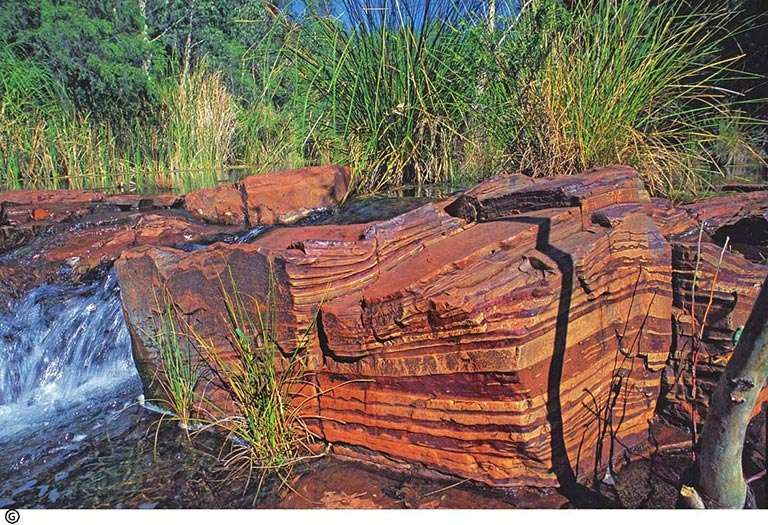
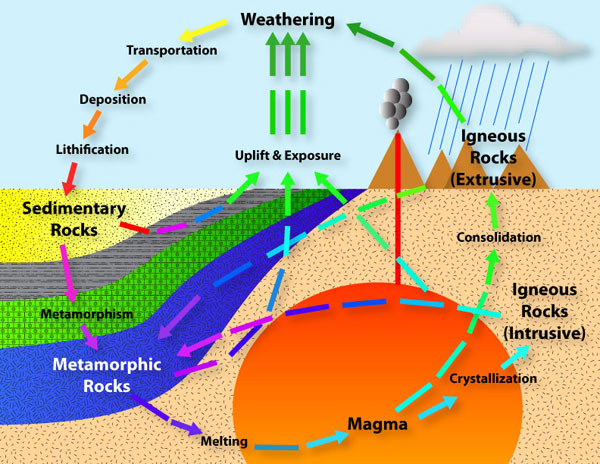
This paper focuses on "Why do rocks also have ages" and introduces the formation opportunities of the three types of rocks on the earth: igneous rocks, sedimentary rocks, and metamorphic rocks. It shows that rocks have ages. The oldest known one is the 4.4 billion-year-old rocks found in Australia. Moreover, the earth continues to produce new rocks through volcanic activity, sedimentation, etc., and it also expounds the significance of studying rock age, that is, rocks are the most important records left by the earth's evolution process. It can reveal major events in the earth's evolution and their timing.