Why can we guess Demosthenes' age from his epitaph?
This article introduces the academic influence of the book "Arithmetica" written by the ancient Greek mathematician Diophantus, and explains that since Diophantus's epitaph records the proportion of the length of each stage of his life and the specific number of years in the form of mathematical riddles, his age can be guessed by calculation to be 84 years old.
Why is Fermat's Last Theorem called "a goose that lays golden eggs"?
This article introduces the process of the discovery of Fermat's Last Theorem and explains why it is called "a goose that lays golden eggs". That is, generations of mathematicians promoted the development of many mathematical concepts and theories, such as the generalization of the concept of integers, ideal numbers, and algebraic number theory, to prove this theorem. Finally, British mathematician Andrew Wiles completed the proof in 1994. The correspondence between elliptic curves and modular forms established by him became the last "golden egg" spawned by this theorem.
Why are people so keen on finding Mersenne primes?
This article focuses on the question of "why people are keen on finding Mersenne primes", introducing the definition of perfect numbers, the history of research and the challenge of odd perfect numbers, the definition of Mersenne primes, the search history and related discoveries in different periods, and explaining the reasons why people are keen on finding Mersenne primes from the perspectives of their connection with perfect numbers, the approach to finding the largest prime numbers, testing computer performance, promoting the development of number theory, and applications in cryptography.
Is the Goldbach conjecture trying to prove that "1+1=2"?
This article focuses on the question of "Is the Goldbach conjecture trying to prove '1+1=2'?" It clarifies that the Goldbach conjecture is not about proving "1+1=2", but rather a conjecture that any even number greater than 2 can be expressed as the sum of two prime numbers, using "1+1" as the expression form. It also introduces the background of the Goldbach conjecture, the research progress of mathematicians from various countries, and the research results achieved by Chen Jingrun, such as the "Chen's theorem". It points out that mathematical research needs to be carried out on the basis of previous achievements, and requires the spirit of innovation and a rigorous scientific attitude.
How to effectively find prime numbers?
The article focuses on how to effectively find prime numbers, introducing the history, operating steps, principles, and applications of the Sieve of Eratosthenes, and also explaining methods for quickly determining whether a not-too-large positive integer is a prime number.
Why is the Riemann Hypothesis so important?
This article introduces the Riemann Hypothesis, which is the only conjecture shared by the important mathematical problem proposed by Hilbert at the International Congress of Mathematicians in Paris in 1900 and the Millennium Prize Problem set by the Clay Mathematics Institute in the United States in 2000. It explains the basic definition and research progress of the Riemann Hypothesis, and elaborates on the reasons why the Riemann Hypothesis is so important from the aspects of its connection with thousands of mathematical propositions, its close relationship with the distribution of prime numbers in number theory, the research process promoting the development of mathematical methods, and its extension to the field of physics.
Do prime numbers also have twin brothers?
This article focuses on the question "Do prime numbers also have twin brothers?" and introduces the definition of twin primes, their distribution characteristics, the twin prime conjecture, and the related research progress of Zhang Yitang. It also introduces the twin prime conjecture, the k-prime conjecture, the Erdős–Turán conjecture, and other related conjectures about prime numbers, as well as some research results in this field.
Why are there an infinite number of prime numbers?
This article focuses on the question of "why there are infinitely many prime numbers", and introduces Euclid's first counterproof of the infinitude of prime numbers in his work Elements of Geometry, as well as another counterproof proposed by Euler. It also discusses the significance of the infinitude of prime numbers for the study of number theory, and subsequent research results related to the distribution of prime numbers, including Gauss and Legendre's conjecture on the number of prime numbers, Riemann's development of the zeta function theory inspired by Euler, the proof process of the prime number theorem, and the still unproven Riemann Hypothesis, etc.
Is 1 a prime number?
This article takes the question "Is 1 a prime number?" as the core issue. By introducing the definition of prime numbers, the fundamental theorem of arithmetic, and the uniqueness of prime factorization, it explains why mathematicians stipulate that 1 is not a prime number. At the same time, it points out that prime numbers are the basic elements of integers and that the list of prime numbers is infinite.
Why do people say that imaginary numbers aren't imaginary at all?
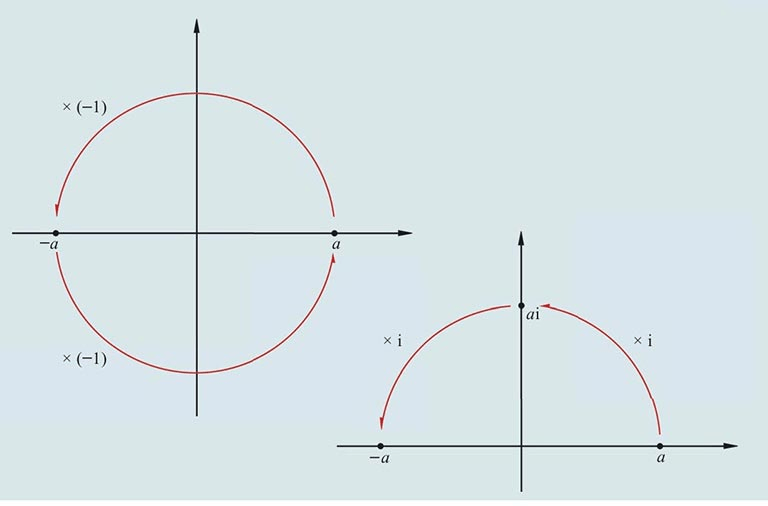
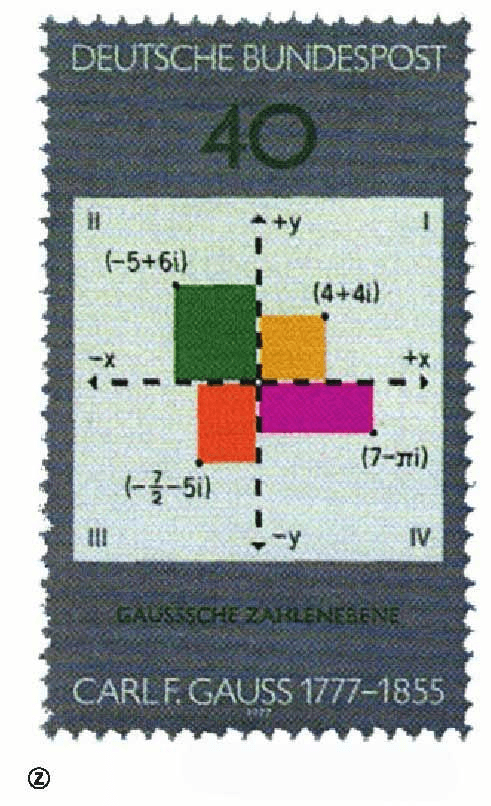
The article "Why Imaginary Numbers Aren't Imaginary" introduces the history of imaginary numbers, from when mathematicians initially regarded them as fictional numbers, to when Wessel, Argand, Gauss, and others gave them geometric meaning and practical models by constructing the complex plane, and then to the subsequent development of disciplines such as complex analysis and its widespread application in multiple fields. It explains that imaginary numbers are not abstract and intangible, but rather have significant practical value.
Why do we need plurals?
This article focuses on the question of "why we need complex numbers", introduces the definition of complex numbers, points out that the introduction of complex numbers in middle school mathematics textbooks due to the discriminant of quadratic equations being less than 0 may seem unnecessary, elaborates on the historical background of Italian mathematician Cardano's introduction of complex numbers in the 16th century to solve cubic equations (even if seeking real roots, it is impossible to avoid the operation of taking the square root of negative numbers), mentions Euler's improvement of the representation of complex numbers, the application of complex numbers in trigonometric functions and other fields, and French mathematician Hadamard's classic evaluation that "the shortest path between two truths in the real number field is through the complex number field".
Why do we say that logarithms are everywhere in life?
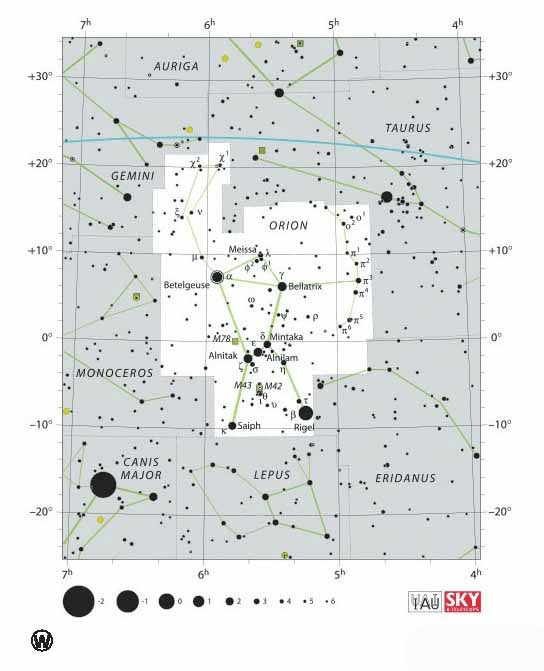
This article explains the reasons for introducing logarithmic scales, including handling large-range numerical changes, facilitating written calculations, and aligning with humans' logarithmic perception (Fechners' law), by citing examples of logarithmic scales in daily life, such as the Richter scale, star magnitude classification, and decibel measurement of sound. It demonstrates that logarithmic scales can be found everywhere in our daily lives.