Why should decimal points be added to align with decimal points but not when multiplied?
This paper focuses on the problem that "decimal points need to be aligned to the decimal point when adding decimal numbers, and decimal numbers need not be aligned". It compares the rule of adding integers to align the number of digits, explains that the logic of decimal addition is "aligned to the left", and mentions the ancient people's naming of decimal places. It explains the reason why multiplication does not need to be aligned, and gives specific examples to prove it.
Is A×B necessarily equal to B×A?
This paper focuses on the core problem of matrix multiplication of "whether A×B is equal to B×A", introduces the definition and operation rules of matrix multiplication, explains that the definition of matrix multiplication has practical needs and mathematical significance, and mentions non-commutativity in Heisenberg's quantum mechanics. Application and awards in matrix mechanics.
Why is a^0=1?
This article explains the reason why a^0=1 (a≠0) is stipulated in mathematics, deduces this conclusion from the algorithm of the power of positive integers, and also mentions that the exponent can be extended to negative integers, fractions, and real numbers. It also explains that the exponent of fractions and irrational numbers has limitations on a, clearly presenting the logic of exponential expansion.
Why is it stipulated that negative results in positive operations?
This article explains the rule of "negative results in positive" in multiplication and division operations. First explain the actual meaning of negative numbers (such as lack of money, debt, etc. in "Nine Chapters of Arithmetic") and the meaning of the number axis, and then explain the rationality of this provision from many aspects such as life examples, the nature of the number axis, the law of algebraic distribution, and the negation logic of negation. Answer the question of why it is difficult to understand.
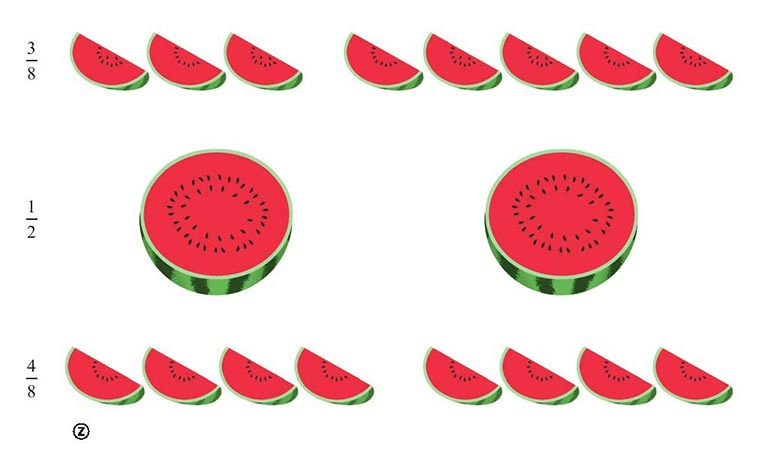
Why do fractions have to be divided first?
This article focuses on "why fractions must be divided first", explaining that fraction addition cannot be directly added to the numerator and denominator respectively, because fractions represent the overall proportion, and different denominator fractions correspond to different division methods, and the general division needs to be converted to the same denominator before calculation can be carried out. Use examples such as watermelon fractions to explain the relevant principles.
Why should we stipulate multiplication and division first and addition then subtraction?
This paper discusses why the mixed four-rule operation stipulates that multiplication and division first followed by addition and subtraction. First, it points out that inconsistent operation order will lead to confusion in the results, and then explains its rationality from the perspective of multiplication being a simple operation of continuous addition. Combined with daily expense calculation examples, it finally extends to the hierarchical rules of number operations.
How does the decimal point come from?
The decimal point appears thousands of years later than the decimal point. In the 3rd century in China, Liu Hui introduced decimal fractions, and a new notation for decimal numbers appeared in the Song and Yuan Dynasties; Western Stefan contributed the theory of decimal numbers. After later evolution, the dividers were once confused. Nowadays, there are two main writing methods in the world, and most modern mathematical symbols have been long sifted into universal use.
Why are there so many symbols used in mathematics?
This paper takes the cumbersome description of mathematical problems in Algebra as an example to illustrate the role of mathematical symbols: simplifying expression, improving the generality of solutions, and promoting the development of mathematics. It has become a symbol of modern mathematics and an internationally accepted "Esperanto", highlighting its importance.
Why is timing based on hexadecimal?
This paper discusses the reason why timing and angle are based on the sexary system, and points out that the sexary system was first used by the ancient Babylonians 3700 years ago. There are two speculations for its occurrence: one is related to the revolution period and the angle division of circles set by the ancient Babylonians; the other is that 60 is the number with the most factors within 100, combined with important factors such as the number of months and the number of fingers in the year.
Why did China first propose the idea of binary?
This article explores why China first proposed the idea of binary system, mentioning the ancient decimal notation system and the symbol system of heaven stem, earth branch, and eight diagrams associated with traditional thought and culture. The Eight Trigrams are composed of two lines of yin and yang, corresponding to binary 1 and 0. Leibniz found that it is similar to binary, so he said that the China was the first to propose the idea of binary.
Why do computers use binary?
This article focuses on "Why does computers use binary", explains the background and role of carry system, introduces the origin and rules of binary, explains its advantages of fewer operating rules, and combines the dual-state characteristics of electronic circuits to explain the reason why modern computers adopt binary.
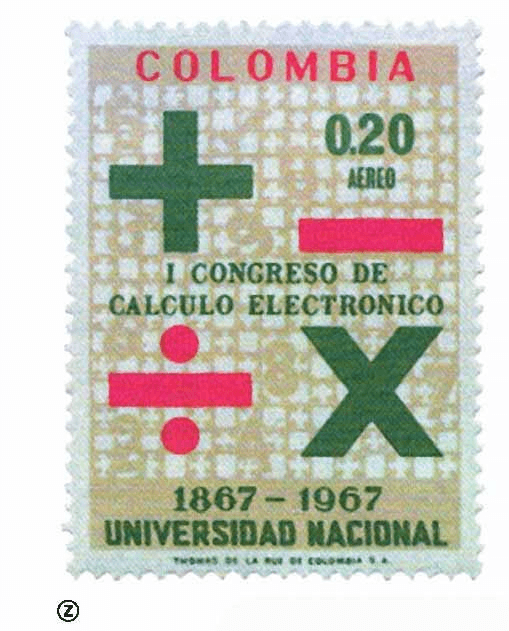
How did the symbols +, -, ×, ÷,= come from?
This article introduces the origin and development of the five operator symbols +, -, ×, ÷, and =:+, -were originally written in India and Greece. After the evolution of the merchant mark, Widman was officially used in 1489, and Veda advocated popularization;× Created by Orret in 1631, and ÷ was first found in Swiss algebra books;= Designed for Recode and popularized in the 18th century, Leibniz once suggested alternative symbols.