Why is it said that the emergence of logarithms represents a revolution in mathematical methods?
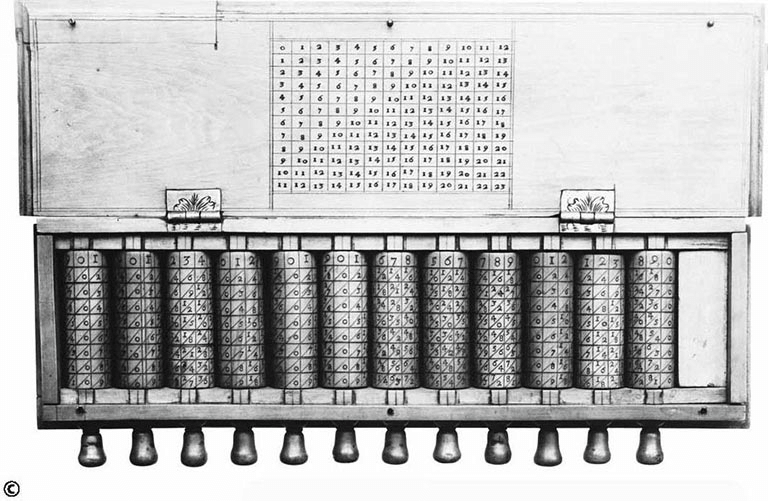
This article focuses on the question of "why the emergence of logarithms represents a revolution in mathematical methods". It introduces that logarithms originated from the heavy computational demands in the European scientific community before the invention of calculators. They were proposed by Napier based on the corresponding relationships between arithmetic progressions and geometric progressions, and served as the inverse operation of exponential operations. Logarithms can transform multiplication and division, as well as power operations, into addition and subtraction, and multiplication operations. By referring to logarithmic tables and inverse logarithmic tables, complex calculations can be greatly simplified. Even in the era of widespread use of electronic computers, logarithms and logarithmic functions still hold great value in mathematical theory and natural sciences. Laplace and Galileo both highly praised the significance of logarithms.
Why is the logarithm based on e called the natural logarithm?
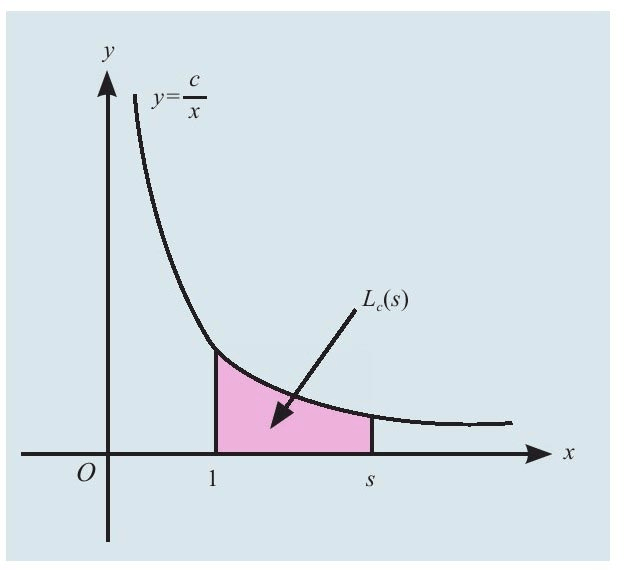
This article focuses on the question of "why the logarithm with the base e is called the natural logarithm", and reviews the development history of logarithms. It introduces the background and role of Napier's invention of logarithms, the definition of the logarithmic function, and the logarithmic function defined by the area of a hyperbola with c=1 corresponding to the simplest logarithm, which is called the natural logarithm. Euler proposed the concept of the base of the logarithmic function after associating the logarithmic function with the exponential function, and found that the base of the natural logarithm is exactly the number e.
Why is the number e widely used in many fields?
This article focuses on the question of "why the number e has such a wide range of applications". It introduces the origin of the number e through the ideal compound interest model, introduces the relevant research of mathematicians such as Jacob Bernoulli and Euler, and explains the unique properties of the exponential function with e as the base and its applications in many fields, including natural phenomena, population research, calculus calculations, and engineering calculations.
What kind of rectangle looks the most beautiful?
This article focuses on the question of "what kind of rectangle looks the most beautiful", and introduces the most beautiful rectangles with edge length ratios close to the golden ratio selected by psychologists through experiments. It also explains the definition and characteristics of the golden rectangle, and introduces geometric figures closely related to the golden ratio, such as the golden triangle, the golden ellipse, and the golden hyperbola.
Why is it said that the golden ratio is everywhere in life?
This article focuses on the theme of "Why is the Golden Ratio ubiquitous in life?" It introduces the definition of the Golden Ratio and the history of its cognitive development, lists its applications in various fields such as architecture, stage performances, photographic composition, five-pointed stars, human body proportions, and artistic creation, and points out that there's no need to mechanically demand complete compliance with the Golden Ratio principles. It's enough to roughly conform to them.
How amazing the Fibonacci sequence is!?
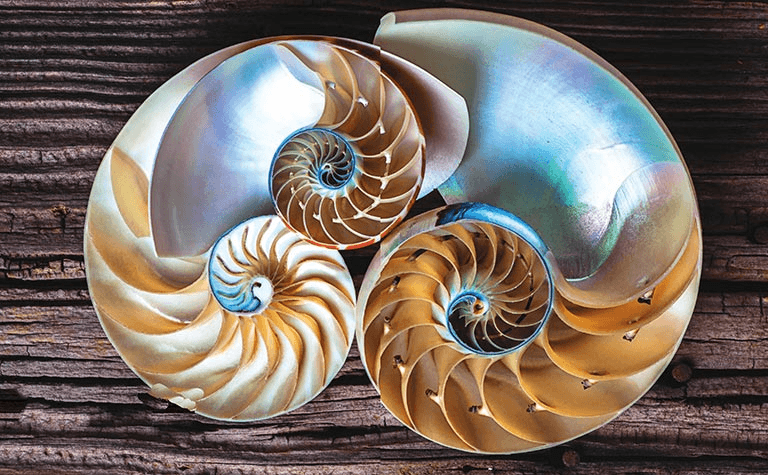
This article focuses on the theme of "How amazing the Fibonacci sequence is", introducing the Fibonacci sequence originating from the rabbit breeding problem in Fibonacci's "Liber Abaci", explaining its recursive rules, sequence definition, and various mathematical properties. It also lists numerous manifestations of the sequence in the plant world, demonstrating the amazing characteristics of the Fibonacci sequence.
Why is the length-width ratio of A4 paper √2:1?
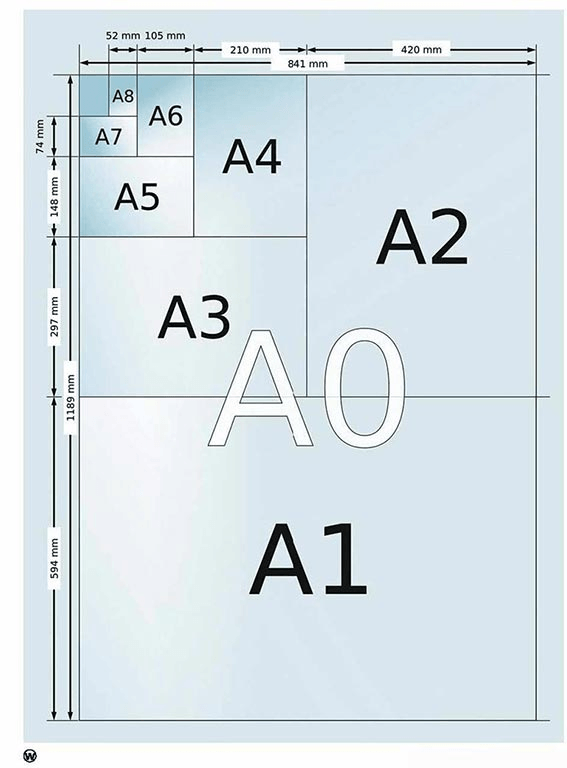
This article focuses on the aspect ratio of A4 paper being √2:1, and explains that the reason why A-series paper adopts this ratio is that the aspect ratio can remain unchanged after folding along the long edge. This ratio can avoid the generation of scrap paper edges during paper cutting, reduce waste, thereby reducing the cost of re-production and improving work efficiency. At the same time, it introduces the specification setting of B-series paper made by folding and cutting in the same ratio.
Why are real numbers divided into rational numbers and irrational numbers?
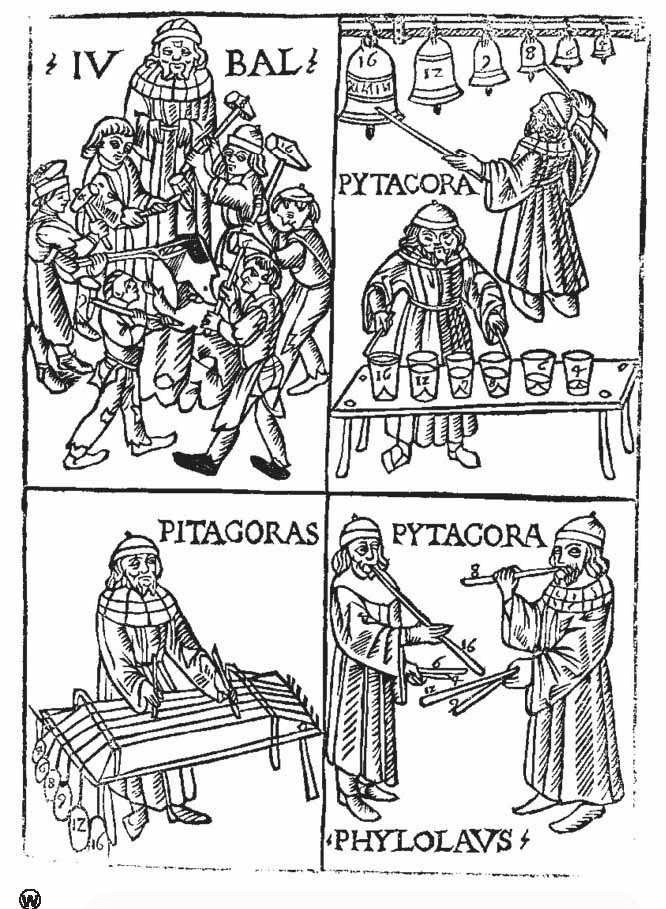
This article focuses on the question of why real numbers are divided into rational and irrational numbers, and introduces the relevant mathematical history background: the Pythagorean School proposed the belief that "everything is number" and that any line segment can be measured through studies such as music and astronomy. Hippasus discovered a new number (later called irrational number) whose diagonal of a square cannot be measured with its side length, and overturned the belief of the Pythagorean School. The original meaning and translation process of the terms "rational number" and "irrational number" are also introduced in this article.
Are 0.1 and 0.10 the same thing?
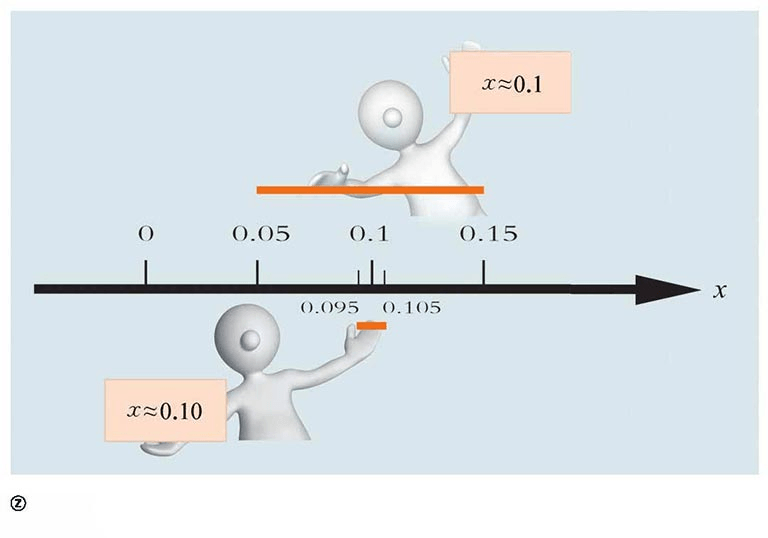
This article analyzes the question of "whether 0.1 and 0.10 are the same" from two perspectives: exact decimal numbers and approximate decimal numbers. It points out that under the category of exact decimal numbers, the two values are equal, and the zero at the end of 0.10 can be omitted. Under the category of approximate decimal numbers, the range of values and accuracy represented by the two are different. The accuracy of 0.10 is higher, and the zero at the end cannot be arbitrarily removed. It also takes financial accounting rules as an example to illustrate the importance of the zero at the end of approximate decimal numbers.
Why are numbers often only given as approximations in many cases?
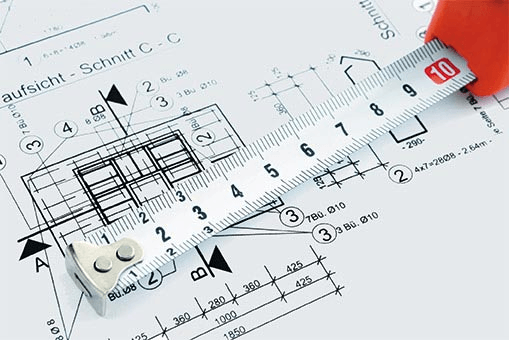
This article focuses on the question of "why we often use approximate values for numbers". Through multiple examples such as age comparison, height measurement, engineering drawing, radio timekeeping, and the lifetime of hyperons, it demonstrates that different practical problems have different requirements for the accuracy of quantities, so we usually choose to use approximate values according to actual needs.
How to quickly determine whether a natural number can be divided by 3, 9, or 11 without a remainder?
This article introduces a method for quickly determining whether a natural number can be divided by 3, 9, or 11. To determine whether it can be divided by 3 or 9, we need to check whether the sum of all the digits of the number in decimal form can be divided by 3 or 9. To determine whether it can be divided by 11, we need to check whether the difference between the sum of the digits in the units, hundreds, and tens of thousands places and the sum of the digits in the tens, thousands, and hundreds of thousands places is a multiple of 11.
Why can scores be converted into finite decimal numbers or infinite repeating decimal numbers?
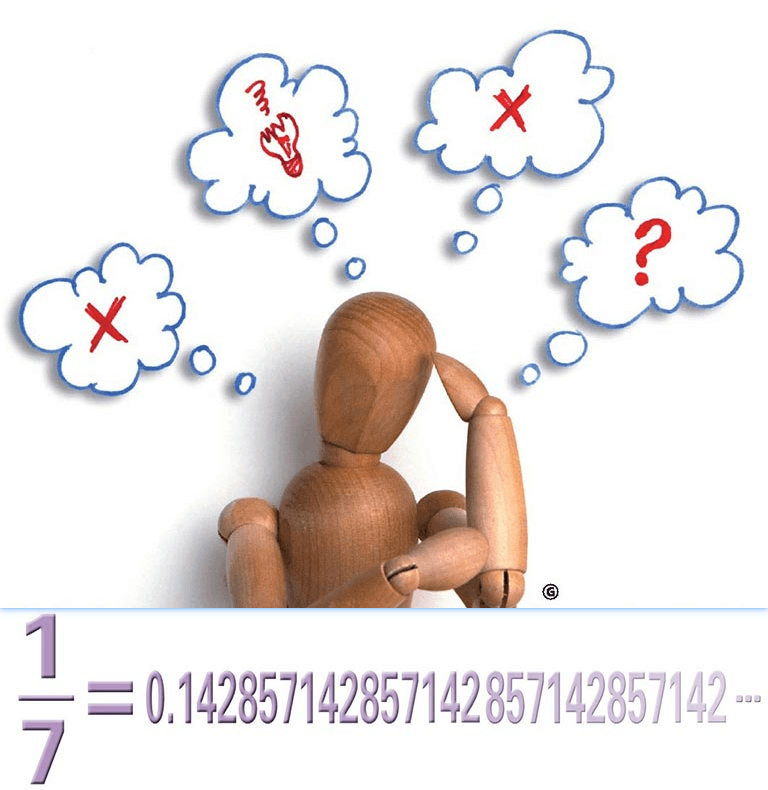
This article focuses on the question of "why fractions can be converted into finite decimals or infinite recurring decimals", explaining the principle that fractions can be transformed into finite decimals or infinite recurring decimals. It also demonstrates that finite decimals and infinite recurring decimals can be converted into fractions, and introduces the conversion method and provides relevant examples.